For anyone who might/will serve a mission, who supports a missionary, who has served a mission, who interacts with missionaries, or who has had a good or bad experience with a missionary of the Church of Jesus Christ of Latter-day Saints.
“Why did you even serve a mission?”
The question surprised me. For a moment, it insulted me. Then I was grateful for it.
Story time
It had been a terribly hard day. It seemed everything about my mission was kicking my butt. And to make it worse, my companion and I weren’t getting along very well.
I don’t clearly remember the whole conversation, but I remember trying to explain to her why I was struggling to do some missionary-related things. It went something like this:
“So you don’t like the heat,” she concluded.
“No.” I got lightheaded quickly when we were out under the Texas sun.
“You don’t like walking.”
“No.” I had always had very flat feet, so even in the most supportive, expensive shoes, my feet got sore if I was on them too much.
“And you don’t like talking to people.”
“Not really.” Social anxiety made a lot of things difficult, including contacting strangers, calling on the phone, and making small talk at church (all in Spanish!). And hugging. Hispanics hug a lot.
“Why did you even serve a mission?”
That question weighed on my mind and heart that day, and I’ve thought and prayed about it a lot since.
Reasons for a mission
One of my last Snapchats right before I left (and before I figured out hashtags…)
I realize that people choose to serve missions for many reasons. Some leave because they hope to travel to exotic locations. Others may hope to learn a language and a culture. Some go to meet new people and make new friends. Some go to get out of the house and into a new environment. Some go for their parents, for their friends, for their bae. Some go simply because they don’t know what else to do with their life.
You might identify with one of these. And I think that there’s no problem with that, even though I think they may not be the best reasons. God will do what it takes to get the people He needs on a mission, and if that means He needs you to believe that you need the cultural experience, He’ll give you that desire.
But although many leave on missions for just okay reasons, I believe almost all stay for the right reasons. A mission is too big a trial for very many to stay without a really good reason.
I think there are a few really good reasons to go and stay on a mission. This was mine:
Why I served a mission
After a moment of surprise, I told my companion:
“Because I wanted to serve the Lord.”
I went because I knew that’s what He wanted me to do, and because I wanted to do what He wanted for me. My mission scripture was my inspiration:
“If ye have desires to serve God ye are called to the work”
I went because, despite obvious roadblocks, I knew God wanted me there. I knew I had something valuable I could share with other people. In hindsight, I know I needed to be there for some individuals, and they needed to be there for me, too.
That companion was one of those people who I needed; we had a rocky transfer, but we eventually became swell friends and still are. I love her a lot, and I know she was supposed to ask me that question.
My hope
I hope I always remember that question as I interact with missionaries today. I feel it’s easy to see when they’re not loving everything about missionary life, and I have heard bad stories from others that have left them pretty disenchanted with missionaries.
I hope that, when we all see the missionaries, we ask ourselves, “Why are they even here?” Then, seeing through Christlike eyes, we must presume that they serve because they love God and His children, and that He is working in them, maybe more than you are letting Him work in you.
Thank you to all those who are preparing to go on a mission, have supported or are supporting a missionary, have served a mission, or have helped the missionaries in some way. Please help them.
Friends, let them into your homes, whether you are a lifelong member of Christ’s Church or barely know who He is. Let the missionaries teach you and those you know. They have been called by God to do His work, and they can help you.
And maybe even ask them: “Why are you on your mission?”
You tell me
If you served a mission, why did you leave? Why did you stay? If you are considering a mission, what’s inspiring you? What else can other followers of Christ learn from this story?
Mormons. LDS. Latter-Day Saints. Utahns? Who in the world are these people? Do they even know who they are?
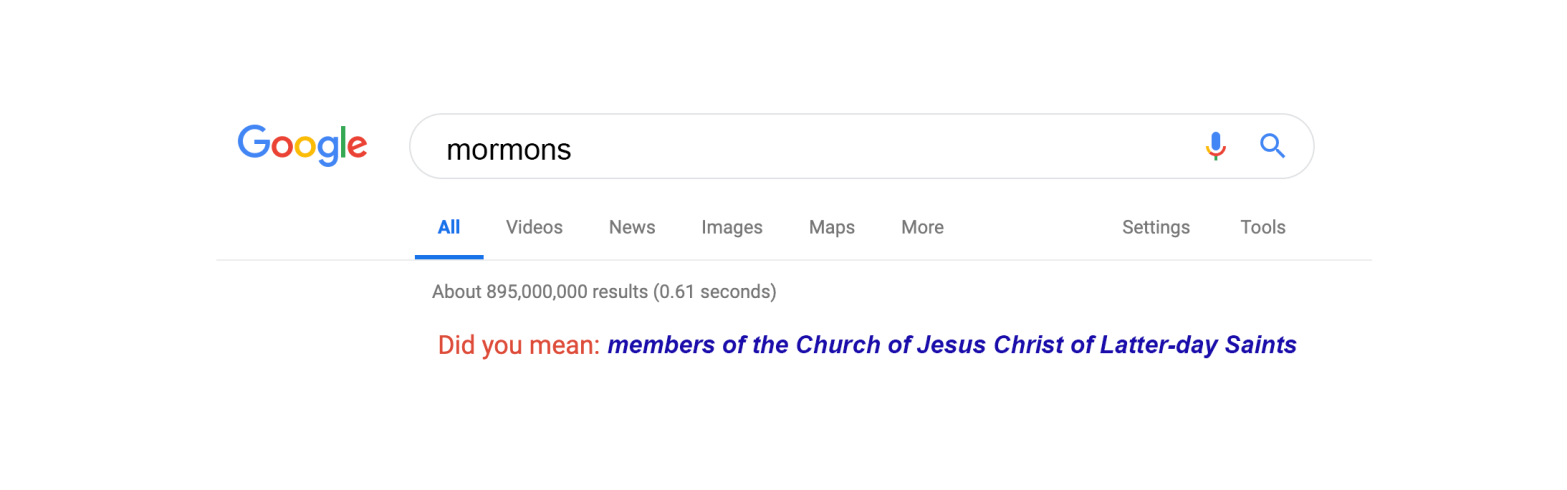
A lot of people know us as Mormons. Many of us even commonly use that name. But if you Google “Mormons,” Google really should respond with saying, Did you mean: members of the Church of Jesus Christ of Latter-day Saints? It’s true! We really do prefer this mouthful.
Some background
If you are not too familiar with our Church, you might be wondering: Where on earth did the name “Mormon” come from? “Mormon” comes fromThe Book of Mormon (yes, kind of like the musical, but no, totally not like the musical). It is a book of scripture that testifies of Jesus Christ and is used in tandem with the Bible. Here’s a short video released by the Church of Jesus Christ of Latter-day Saints to explain a little more about it:
Unfortunately, in the early days of the Church, members were called Mormons as a slur, especially in cases of persecution and violence against them. It’s since transformed to a casually-accepted nickname used by members, friends, and enemies alike. Others have tried to be a little more accurate by using the name LDS (Latter-day Saints) as another nickname.
We believe that Christ has been running His Church through prophets for 2 centuries, hastily restoring it to its perfect state in preparation for His Second Coming “… in the dispensation of the fulness of times” as prophesied by the Apostle Paul. (Ephesians 1:10)
Flash forward
Russell M. Nelson, president of the Church since January 2018, has already established a reputation for keeping Church members on their toes, as he has announced many “big changes” to Church policy.
In August of 2018, President Nelson announced the following with all the authority of a living prophet of the Lord Jesus Christ:
The Church promptly began implementing massive changes throughout their departments and resources to reflect this reemphasis, including the change of the Church website, once lds.org, now churchofjesuschrist.org.
A couple months later in a worldwide Church address, President Nelson gave a 15-minute talk reemphasizing this change. He especially requests that Church members use the correct name of the Church in all cases, and to encourage others to do the same. About this declaration he is unapologetic. As a prophet who speaks for Jesus Christ in these days like the prophets of old, he states:
[The Savior] is serious. And if we allow nicknames to be used or adopt or even sponsor those nicknames ourselves, He is offended.
What’s in a name or, in this case, a nickname? When it comes to nicknames of the Church, such as the “LDS Church,” the “Mormon Church,” or the “Church of the Latter-day Saints,” the most important thing in those names is the absence of the Savior’s name. To remove the Lord’s name from the Lord’s Church is a major victory for Satan. When we discard the Savior’s name, we are subtly disregarding all that Jesus Christ did for us—even His Atonement.
I would like to testify that this is true. And now, it has been over an entire year since this initial statement from this prophet of God.
Policy in practice – a culture shift
Honestly, I have always felt uncomfortable using nicknames for the Church and its members, so I am grateful the change has not been too difficult for me. However, it is hard for me to still see newspaper headlines stating “LDS Church Does This” or “Mormon Bishop Does That.” It pains me even more to hear longtime members of the Church of Jesus Christ of Latter-day Saints—and even some I look up to—say, “…so when we as Mormons do… wait, can I still say that? Well, I’m going to anyway…” or just continue on saying “She’s LDS” or “we’re just Mormons” without batting an eye.
Despite this disappointment, I have perceived that we are edging toward a massive cultural shift. The more I and those around me do use the name of the Church correctly, the culture of the Church has already begun to move away from arbitrary, rote traditions toward thoughtful applications of Christ’s teachings and love.
A few months ago, I was home visiting my parents. Over Sunday dinner, they were urging my 17-year-old brother to ask out a girl in the ward. Flustered and annoyed, he started to respond, “No! I can’t go out with her! You can’t ask people out in your ward when you’re M—a member of the Church of Jesus Christ of Latter-day Saints!”
We all started to laugh, but then we all paused. As we considered his statement, a critical conversation ensued. Why in the world would being a member of the Church of Jesus Christ of Latter-day Saints mean you can’t ask someone out in your congregation? Jesus never said anything about that. It’s a little ridiculous.
There are other aspects of the culture of members of the Church (often dubbed “Mormon Culture” or even “Utah Mormon Culture”) that have nothing to do with following Christ and perhaps even distract or contradict this mission.
A cartoon from 2011, poking fun at “Mormon Standard Time” (Credit: The Mormon Cartoonist)
For example, I’ve heard many members use something coined “Mormon Standard Time” as a joking excuse for being late to events or even to church. But think about it: Why would being a member of Jesus Christ’s restored Church mean you can arrive late to your obligations? If anything, wouldn’t that mean you should be generally reliable and honest rather than tardy and fickle?
What we’re promised
On the other hand, I would like to challenge you, members and friends of the Church, to imagine a world where everybody refers to us and everything about us as part of the Church of Jesus Christ of Latter-day Saints rather than by any nickname.
Indeed, President Nelson reveals these exciting promises:
My dear brothers and sisters, I promise you that if we will do our best to restore the correct name of the Lord’s Church, He whose Church this is will pour down His power and blessings upon the heads of the Latter-day Saints, the likes of which we have never seen. We will have the knowledge and power of God to help us take the blessings of the restored gospel of Jesus Christ to every nation, kindred, tongue, and people and to prepare the world for the Second Coming of the Lord.
I believe Christ’s work through His Church will be unhindered and unleashed to work on people and the world in a way it has never been permitted to in the history of the world. Imagine the restored power of Jesus Christ in all its glory shared with light and authority. I believe the future of Christianity is very bright.
My favorite “policy change”
This correction is perhaps my favorite of recent changes to Church policy. No, it wasn’t 2-hour church! And of course, the introductions to ministering and the family-centered, church-supported curriculum, Come, Follow Me, are very dear to me.
However, I feel that shifting the Church’s focus toward Christ in something as simple as a name prepares the way for effective, Christ-inspired incorporation of all recent changes as well as those to come. For example, by putting Christ at the center of our conversation, communication, and even identities as members of His Church, we receive added power to invite Him into our congregations and homes as we incorporate policies like ministering and Come, Follow Me.
In so many ways, we are like the New Testament Jews learning to retire the Law of Moses and adopt the Higher Law taught by Jesus. I believe President Nelson was inspired by the Lord to help us live at a higher standard to prepare for Christ’s not far distant return to His Earth.
I encourage you, whoever you are, to please try to take the prophet’s counsel to heart. Please don’t call us Mormons, and please do remember that we are trying to follow Jesus in everything—an effort that is not meant to be convenient. No matter who you are, I know the Lord will bless you for following this commandment.
What do you think?
How have you and your family incorporated this reemphasis of the correct name of the Church? Do you agree that it will chase away aspects of “Mormon Culture?” Why or why not? Which aspects would you like to see dispelled? Share your thoughts in the comments.
Members of the Church of Jesus Christ of Latter-day Saints around the world have just heard again from modern-day Moseses: a living prophet, 12 apostles, and other leaders called by God. For 2 days, they taught us many truths with clarity, provided guidance regarding how to better run Christ’s Church as He would, and left us with exciting promises for the upcoming months.
If you missed any part of this 10-hour event, or to review the messages given, you can visit churchofjesuschrist.org to watch, listen to, or read the addresses.
In the wake of this dense outpouring of God’s word, I have heard most about the closing remarks from our prophet, President Russell M. Nelson, at the end of the conference. He declares the following:
In the springtime of the year 2020, it will be exactly 200 years since Joseph Smith experienced the theophany that we know as the First Vision. God the Father and His Beloved Son, Jesus Christ, appeared to Joseph, a 14-year-old youth. That event marked the onset of the Restoration of the gospel of Jesus Christ in its fulness, precisely as foretold in the Holy Bible.
…
Thus, the year 2020 will be designated as a bicentennial year. General conference next April will be different from any previous conference. In the next six months, I hope that every member and every family will prepare for a unique conference that will commemorate the very foundations of the restored gospel.
I’ve heard a lot of people talking about how excited they are for next general conference. I like that this enthusiasm regarding general conference is a growing trend as of recent years. President Nelson’s season finale certainly left us eager for more!
However, many seem to be left asking, what should I do to prepare? I have spent the last week asking myself the same question. I know I am very excited and grateful to be a part of this upcoming conference, but what should I do about it? The prophet has promised that if we do our part to prepare, the next general conference will “not only be memorable; it will be unforgettable.”
That’s why I have spent the week accumulating just a few answers to get both of us started!
Disclaimer: President Nelson has specifically asked that we practice the process of personal revelation to choose our own answers and make our own plan to prepare for this special general conference. This list is only provided as a springboard and supplement in your own process. You may choose to incorporate one, a few, many, or none of the following suggestions.
Let’s jump in to 15 ways to prepare for the much-anticipated 2020 bicentennial general conference!
15 Ways to Prepare for General Conference
#1 – Study the First Vision
Reading Joseph Smith’s record of the First Vision as recorded in the Pearl of Great Price is the first method President Nelson suggested as a way to prepare. (See the Pearl of Great Price.)
You may choose to go beyond just reading this record in your effort to learning more about the First Vision. A great place to start may be the Gospel Topics Essay: First Vision Accounts. You may also study and compare each of the 4 firsthand accounts, which are explained and linked in that essay. You might even choose to memorize a section of any of the accounts that speak to you especially.
#2 – Read Saints
Saints: The Standard of Truth, the first volume of the Saints series, released in 2018, details the beginnings of the Restoration of the Gospel and Church of Jesus Christ. You may decide that reading or rereading it may help you understand the heritage of the Church and see the blessing that it is in these latter days.
You may read or listen to the book for free on the Gospel Library app or on the Church website. You may also purchase a physical copy online or at a Church Distribution Center.
#3 – Read the Doctrine and Covenants cover to cover
Members of the Church don’t commonly read this book cover to cover, but the Doctrine and Covenants is the source of many restored truths given to us by a gracious God. As it directly states, the Doctrine and Covenants “[contains] revelations given to Joseph Smith, the Prophet, with some additions by his successors in the presidency of the Church.”
If you have not read, have not read recently, or just feel you could better understand Doctrine and Covenants, this might be a great way for you to prepare for the next general conference.
#4 – Read the Book of Mormon cover to cover
Many members of the Church have grown to love the Book of Mormon. We have been urged by many recent prophets to study it every day.
Many members have purchased (or asked the missionaries for) a copy of the Book of Mormon and read it all the way through with a specific question or topic in mind. Many women answered President Nelson’s call last year to read the Book of Mormon and mark every reference to the Savior. Many who have done this have experienced a change in their lives and an increased sense of peace. They found answers to their questions and strengthened their understanding of and relationship with Jesus Christ.
On the other hand, some members have not yet read it, have not yet read it all the way through, or simply have not yet felt the “mighty change of heart” (Mosiah 5:2) so many claim to feel. Others may think they once felt it but no longer do, at least not as strongly.
Consider setting a goal to read the Book of Mormon all the way through between now and next general conference. You may choose to obtain a new, paperback copy in which you may mark scriptures and take notes as they regard a particular topic of your choice (i.e., the Restoration, blessings the Book of Mormon, Jesus Christ, His Church, etc.).
#5 – Create a piece of art
Some people feel moved to express their feelings through the arts. For example, I like to write what I think into long posts. (Sorry not sorry!) You might feel inspired to create something as well. It may be in the form of a musical composition, a poem or essay, a 3-dimensional art project, or sketch or painting. This may help you focus your studies on a particular aspect of the Restoration and strengthen your testimony of it as you share it.
#6 – Ask the missionaries for help
The first lesson missionaries teach (as recommended in Preach My Gospel) is the Message of the Restoration of the Gospel of Jesus Christ. You may invite the missionaries to your home for a family activity or family home evening. Ask them to teach you the lesson of the Restoration and bear testimony of it in your home.
Ponder if there is someone in your life whom you could invite to attend the lesson. Ask God for strength and guidance as you invite them with love.
#7 – Watch the Book of Mormon Videos
President Nelson also recommended incorporating the new Book of Mormon Videos into your family and individual studies. This may be a great way to inspire conversations with and teach your children. It also might be a good way to replace other media time in your home with uplifting messages of Christ.
New videos are released on YouTube; episodes of the first season are posted on Fridays through the end of 2019.
#8 – Study the doctrine of the priesthood
In the women’s session of this past general conference, President Nelson gave women a charge:
I entreat you to study prayerfully all the truths you can find about priesthood power. You might begin with Doctrine and Covenants sections 84 and 107. Those sections will lead you to other passages. The scriptures and teachings by modern prophets, seers, and revelators are filled with these truths. As your understanding increases and as you exercise faith in the Lord and His priesthood power, your ability to draw upon this spiritual treasure that the Lord has made available will increase. As you do so, you will find yourselves better able to help create eternal families that are united, sealed in the temple of the Lord, and full of love for our Heavenly Father and for Jesus Christ.
Women, this certainly should be part of your plan to prepare for the next general conference. Men, you may also decide that following this counsel will benefit you and your family.
#9 – Study older general conference addresses by topic
All general conference addresses are evidence and a part of the ongoing process of the Restoration of Christ’s Church. Studying from many of them could be important in strengthening your testimony. If you decide to do so, choose a topic related to the Restoration you would like to study. Use your Gospel Library app or the Church website to search for and study all (or many of) the conference talks about that topic.
#10 – Find a personal place to write impressions, thoughts, questions, and take-aways
There is a good chance that you will choose to include this as part of your plan in tandem with one or many other methods of preparation.
There are also many ways to do this!: You could write in a notebook something that stands out to you every time you study, or you could even purchase a separate journal to fill with insights from your studies. You might prefer to make a list on your phone of all the blessings you can identify that come thanks to the Book of Mormon. Perhaps you will choose to make extensive notes and highlights in your Gospel Library app as you study.
I would highly recommend at least writing down the goals you have chosen for your plan to prepare for general conference.
Choose a system that works for you. If you try it and it isn’t working, just try something else.
#11 – Share your insights on social media
You might find that putting your social media time to good use can help you think more deeply about the things you study. You might set a goal to share one message a week on your Instagram story about something you read in your studies of the Restoration, or perhaps you will choose to share messages from the Book of Mormon Videos or other Church publications on Facebook.
Find Spack Chats on Facebook and Instagram for more sharable insights and gospel conversations to get involved in.
#12 – Get an accountability partner or group
After you set your specific study goals, it may help you stay committed to get together with at least one person you are close to (a spouse, roommate, parent, good friend, etc.) and share your plan with them. It may be helpful to ask them to follow up with you occasionally to see how you are doing and what you are learning. You might ask them to do some of your plan with you for added support.
You could even get together with your family or a group of people who know each other’s goals and ask questions about what everyone is learning. You could even do this by hosting a group chat with friends, family, or ward members.
#13 – Share your testimony in sacrament meeting
If you are like me, you do not like sharing your testimony in sacrament meeting on fast Sunday.
I was once, however, inspired by a couple who made a New Year’s Resolution to share their testimony every month in fast and testimony meetings. They taught me what it means to share a powerful testimony. Their testimonies were often brief and rarely varied much in content or structure. They were mostly simple declarations of belief: “I believe in… I have faith that… I know…”
Our own faith and testimony will grow if we share simple, powerful testimony of the Savior, His Gospel, His Restored Church, and the consequent blessings thereof. As Apostle of the Lord Boyd K. Packer states, “A testimony is found in the bearing of it!”
Therefore, in your pursuit to learn more about Christ and His Restored Church, you could choose to set a goal for yourself to bear testimony in church.
#14 – Choose your own questions to study
As President Nelson concluded: “Select your own questions. Design your own plan.”
You might already have questions, concerns, uncertainties, or even doubts about aspects of the Church. There might just be one thing in Church history (or recent news!) that you don’t understand; you might wonder if Jesus Christ is real or really cares for you. Whether great or small, prayerfully decide which questions should be your guide as you plan to prepare for the next general conference.
If you don’t even know what you don’t know, ask God. He will guide you to what He wishes to teach you.
#15 – Appreciate what God has already taught you – study this past general conference
Take heed what ye hear: with what measure ye mete, it shall be measured to you: and unto you that hear shall more be given.
Show the Lord that you are grateful for this past conference. The Lord will give us what we prove we are ready to receive. If we ignore or forget about existing recent counsel, the Lord will hesitate to open to us new revelation.
Study each conference talk again. Look for what God is asking you to do. Write down specific goals and begin making changes to do these things in your life. Start now. Don’t be discouraged if (when) you are not perfectly achieving these goals; just don’t give up! If you consistently try to improve between now and next conference, you will show to the Lord that you are eager to hear His word and willing to work to apply it.
I believe that, if we make a habit of treasuring the word of God every time it is granted to us, every general conference will become unforgettable.
Share your insights with Spack Chats
So this is sort of a bonus tip. You’re welcome 😉
Of course, get the conversation going below. Also, check out the Spack Chats Instagram and Facebook pages, where you can share additional insights with extra conversation prompts. With your permission, I may even highlight your ideas and experiences.
I think that, if we help each other along, we can each experience a deeper conversion as we prepare for the upcoming general conference and everything else the Lord has in store for us.
What are you going to do to prepare for the bicentennial general conference? Do you have any other ideas to share? Is there something you have already learned since beginning to prepare?
A guide for people who are pregnant, may ever be pregnant, have or may ever have a pregnant partner, have a family at all, belong to a church congregation, belong to any social group, or are people.
“For a small moment have I forsaken thee; but with great mercies will I gather thee.”
Isaiah 58:7
Well, let me clarify that this is a truth about pregnancy. Pregnancy is wildly different for every woman.
When my husband and I found out I was pregnant, we were so happy. We were incredibly grateful for this miracle and very excited to meet our little one.
It seemed that no sooner had I found out I was pregnant that I found out what that meant for my body. I was instantly out of commission. My summer full of big plans and aspirations was depleted to a miserable many months of barf bags and bed. There were days at a time when I couldn’t leave my sweltering, non-air-conditioned apartment. (The delayed launch of this blog is just one case of things not going according to plan.)
Pregnancy became hell.
I suddenly felt abandoned by God and weak in all areas of my life:
Physically, I felt like I was about to shrivel up; in addition to vomiting every day, I couldn’t exercise at all, sleep well, or eat or drink regularly. I was sweaty all day long, and on the days I felt well enough to shower, I usually only did so when my husband was available to help me when I thought I would pass out.
Mentally, I could barely think straight. It was so difficult to focus on anything except the nausea and the pain.
Socially, I felt utterly alone until Matt got home from work. Almost any other interaction I received was usually at best, shallow, and at worst, a slap in the face. Most people I interacted with told me to “let them know if I needed anything” or gave me “helpful” advice about the simple steps I needed to take to stop feeling sick. Or worse: they just told me to “enjoy being pregnant.”
Spiritually, I was sick and fragile; reading the scriptures was strenuous and difficult, I barely ever made it to church, temple attendance became impossible, and I felt forgotten by my ward and by God.
Worst of all, I didn’t feel like I was having a baby; I felt like I was having an illness.
Finally, about halfway through pregnancy, it seems that the “first trimester” is mostly behind me. I know I’m still one of the blessed ones who doesn’t suffer from this kind of morning sickness (or worse) every single day during the entirety of pregnancy, and I’m grateful for that. I’m still nauseous in the morning and some days I do throw up, but most days, I can get on with my life. I finally feel like a person again, and my energy has in large part returned.
So why would I even share all this?
To explain to you 3 things I’ve learned and how I came to understand them. These are things I wish I had known years ago and hope for the sake of society that everyone else knew, too.
1) God will not leave you alone, at least not truly, and not for long. Reach out to Him and He will run to you.
My gratitude to the Lord has increased so much in the last few weeks. Even though it was hard for me to see it then, in retrospect, I can see that He was with me. And I can see increasing evidence that He is still taking care of me. He is slowly granting me more understanding of His plan for me and what He has been doing to bring it about. I have faith that I will come to understand this better in the months and even years to come.
I felt entirely alone, but heavenly glimmers of comfort have come to restore my hope that the Lord will allow me to feel His presence more and more fully in the hours, days, months, and years to come.
I would advise everyone to write down the moments or periods when they do feel blessed. You will need to remember those times when the trials come (or get worse).
I echo the words of Isaiah, when he declared that the Lord might leave us feeling alone for a moment, but that He has always been present and will soon allow us to feel His peace in full:
“For a small moment have I forsaken thee; but with great mercies will I gather thee.
“In a little wrath I hid my face from thee for a moment; but with everlasting kindness will I have mercy on thee, saith the Lord thy Redeemer.
“For the mountains shall depart, and the hills be removed; but my kindness shall not depart from thee, neither shall the covenant of my peace be removed, saith the Lord that hath mercy on thee.”
Isaiah 58:7-8, 10
Finally, the Lord has granted me eyes to see that my little one is real, precious, and valuable. I saw that my prayers were being answered when I saw my baby wriggle curiously during my last ultrasound.
2) Women should share when they get pregnant.
Women are often hesitant to share when they are pregnant. I was. Much of this is caused by anxiety regarding higher miscarriage rates in the first trimester.
But here is what I have decided: While you are certainly entitled to announce a pregnancy on your own terms, it is okay for people to know if you are pregnant and if you lose a child to miscarriage. In fact, for some people, it might even really help.
In the last year or so, I have spoken with several women who have confided in me about their own recent miscarriages, sometimes in the midst of their heartbreak and recovery. What is perhaps most heartbreaking is that nobody knows of their pain. Nobody knows they need help.
Women don’t need to inform Instagram the moment they get a positive at-home pregnancy test, and some women really might need some time before they are ready to let anyone else know. However, I think fear of miscarriage should not inherently be a universal reason for all women to wait until 12 weeks to announce their pregnancy.
If a woman does miscarry, it may truly be helpful for their ward, friends, family, and workplace to know and be ready to support them in any way they can. When anyone experiences the death of a loved one, it usually merits some loving response from all of these parties. All the more reason should the people in a woman’s life intervene to bless and assist her when she loses her child at her own personal physical trauma.
Cases of miscarriage aside, women should not suffer in silence in their moments of need. I know not all women are as affected by pregnancy as I have been, but I know I am not the only one.
3) People need to reach out to women during early pregnancy, not just late pregnancy and after baby comes.
I grew up understanding that pregnancy and childbirth was hard, but not really a thing that has to affect your life too much.
My whole life, I had heard and believed that any woman can be as professionally successful as men and achieve all of their dreams of motherhood and more at the same time. I thought pregnancy was hard, but because women were tough, it wasn’t really something that could get in the way of any of their goals. While I believe these claims are are rooted in encouraging intentions (and some successful case studies), these lofty expectations set me up for internal dissonance and severe disappointment.
My own mom had 5 kids with no complications. She has worked part-time as long as I can remember, including during pregnancy. She maintained her very active lifestyle with seemingly few abnormalities during pregnancy; she even went running the morning she went into labor with my youngest brother.
The ward I grew up in was very loving and supportive, but from them, I learned to perpetuate my misconceptions. To me, it seemed that the women there had similarly straightforward pregnancies. Pregnant women attended church and went about their lives. When they had their babies, the sisters promptly ensured that those families received dinners every night for at least a week, then everyone moved on. That was just how it was.
I’ve since learned that that wasn’t how it was for everyone there; at least one woman in my home ward spent her last pregnancy entirely crippled; she was so sick, she had to be treated in the hospital with an IV.
I don’t know how many women have masked and downplayed their pain and misery during pregnancy, or who have been simply ignored until cute little baby makes an appearance. I know that for myself, I walked through hell almost totally alone, and there must be women that feel the same way.
But I ask forgiveness from God and from society for my naivety and for turning a blind eye to those I could or should have reached out to. And I thank those blessed few who did come visit me when I was in such misery.
If there is a pregnant woman in your life, ward, family, whatever, reach out to her. God placed her in your life, and there is a good chance she needs something from you. Be willing to find out from her and from God what you can do.
Finally standing—and smiling!—at 22 weeks
Let’s zoom out for a second
As I “zoom out” to what I hope is a more Godlike perspective, the way I see it, how we treat a pregnant woman should not be all that different than how we treat anyone else.
I believe most people are suffering more than they admit. Each of us should take more personal responsibility to care for those around us. Those who have promised to serve Christ have a special call to bear others’ burdens.
God should not need to do more than place someone in the path of a Christian to say to them: “I have placed this precious soul in your stewardship. Take care of them.”
I pray that you and I can both step up to this stewardship a little better with every day.
“As we have therefore opportunity, let us do good unto all men, especially unto them who are of the household of faith.”
Galatians 6:10
What do you think?
I would love to hear what you think. Do you agree? Is there a scripture or doctrine that would inform us better? What is your experience with pregnancy and/or helping others? Do you feel inspired to do something? Get chatting in the comments below.







 Spack Chats