
A Rebuttal to “Modernized” Church Doctrine – Debunking False Teachings from BYU, Instagram, and More

4 examples of “modernized” Church doctrine and 4 ways we can prepare against it

A phenomenon has been brewing under the surface for years. This phenomenon has worked its way into the Church ”—not into the church of God, but into the hearts of the people who professed to belong to the church of God.” (Helaman 3:33) It may have always been there, but, with the help of the internet, it has spread rapidly, emerged into mainstream Church-member culture, and, finally, become exposed. 

I speak of a practice of choosing to disbelieve certain parts of Church doctrine, then preaching the adapted beliefs as true. I call it “modernized” Church doctrine. We should be unsurprised by such teachings; we know that many will teach philosophies of men, mingled with scripture. We must identify these traps and seek the truth.

I wish to identify then discuss some examples of prominent claims that, from my perspective, are commonly believed (and even promoted) by Church members yet are partially or wholly false.

I bring these up not to criticize but to sound an alarm. I am uninterested in calling out names; instead, I wish to identify and analyze the ideologies with the goal of teaching how we may all do the same when we encounter these and similar “modernized” Church doctrines and how to inoculate ourselves against falling for these traps.

“Modernized” doctrine examples

Let us first list a few examples of this “modernized” doctrine; later, we will measure them up against doctrine and discuss where they go wrong.

“Modernized” doctrine #1

From an Instagrammer:

“You can believe in the Gospel of Jesus Christ and still struggle with aspects of the Church. I do. I have a testimony of the Gospel of Jesus Christ but I struggle with gender inequality, the treatment of LGBTQ people, polygamy, and withholding truth about history in the Church, to name a few.”

To this point, this is all totally okay. You can believe in the Gospel of Jesus Christ and struggle with aspects of the Church. But here is where it gets questionable:

“You can still be active and not accept every aspect of the Church.”

“Modernized” doctrine #2

I’ve had multiple friends and acquaintances claim vocally and online that they’ve decided to disbelieve “The Family: A Proclamation to the World.” Here are a few examples of the reasoning:

a) “The Family Proclamation is not canon.”

b) “I think the Church will soon allow gay marriage in temples.”

c) “The Church has renounced old doctrine before, and they’re going to do it with the Family Proclamation.”

“Modernized” doctrine #3

Off- and online, I have witnessed and had this conversation many times: “So how can I reconcile my concerns and doubts about the Church with my faith in the Gospel?” This is a really great question. The world offers many answers, some good, some decent, and some bad.

One popular answer (discovered on social media by an influencer in the Church):

“Only you can decide which things are real, foundational doctrine.”

“Modernized” doctrine #4

This phenomenon of modernizing Church doctrine is not only happening in pockets among members in person and online. It’s spreading from one of the main epicenters of Church life: BYU campus. I stumbled across the new Instagram account @keeping_faith_at_byu, which collects and presents dozens of stories from BYU students who have had encounters with professors and other school authorities promoting ideas that oppose the doctrine of Christ’s Church.

Here are just two stories from Keeping Faith:

a) “I sat in on a sociology of gender class where the professor deconstructed the family proclamation and talked about essentially how uninformed or incorrect it was, and how scientific knowledge has progressed since it was written and now the information is outdated.” -Anonymous BYU Psychology student

b) “I was taught in class that agency is a construct that doesn’t exist, and thus we as human beings are fundamentally determined beings, and thus are incapable of choosing right from wrong and thus cannot be held accountable for our sins.” -Anonymous BYU student

Debunking these beliefs by applying Christ’s doctrine

Now, you may have read these examples and felt comfortable with them. You may be feeling defensive when I say: These modernized Church doctrines are simply the philosophies of men mingled with scripture, leading us down a sneaky but rapid path to apostasy.

Whether or not you agree with my claim, please allow me offer you a case for why each of the four quotations (or set of quotations) are false and present dangerous beliefs to the Church and its members who desire to follow Christ.

Breakdown #1

To recap:

“You can believe in the Gospel of Jesus Christ and still struggle with aspects of the Church. I do. I have a testimony of the Gospel of Jesus Christ but I struggle with gender inequality, the treatment of LGBTQ people, polygamy, and withholding truth about history in the Church, to name a few.”

Again, this is not a problem. It’s actually really brave to admit which doctrinal points you may be struggling with. Talking about it can help you begin to tackle those issues.

“You can still be active and not accept every aspect of the Church.”

Problem.

First, let’s define our terms here:

  1. By “aspect of the Church,” I will proceed as if the author means to say “every doctrine, statement, command, or action officially from or by the Restored Church of Jesus Christ.” If the author only means to say “everything any Church member or leader has said or done individually,” there is no problem. From what I understand about this individual, however, they likely also mean to take issue with key doctrinal points and official Church procedures. Either way, the ambiguity of the statement easily reads to include my interpretation of this language.
  2. “Not accepting,” at least as far as it seems to me, is different than struggling to accept. It sounds as if the writer has decided to stop seeking answers beyond what they already believe. There may be discussion about their intent, but I will continue with this point under the assumption that my interpretation of the intent is true. Regardless, if that’s how I read it, surely others will read it the same way as well, either consciously or subconsciously, and I fear that that may damage their faith.

Proceeding with these terms, the Instagrammer is sort of right; you can be an active Church member and not accept every aspect of the Church. You can be an active Church member and do a lot of things: steal, watch pornography, believe racist and hateful things about others.

But there is something to keep in mind: cognitive dissonance.

Cognitive dissonance is when you hold two conflicting beliefs or ideas at the same time. If I believe watching pornography is wrong, but I still keep doing it, I will experience cognitive dissonance. It is not comfortable. It can go on for a long time, but eventually, one side will win out. I will either allow my belief that watching porn is bad to drive me to quit, or I will keep going and renounce (or at least ignore) any claims that it is wrong. Eventually, I may even come to decide that watching porn is morally good.

Whenever you intentionally choose to believe or do something contrary to God’s will, and especially if you are a member of His Church and have full access to the Spirit, you will experience cognitive dissonance.

In this case, if you believe the Church is true, but you do not accept every aspect of the Church, you will experience cognitive dissonance. That dissonance may last for weeks or years, but, eventually, one side will win over the other. (Now, if you do not believe the Church is true, that is something you will need to discover on your own through study and prayer.)

Photo by Ben White on Unsplash

If you believe in the Church, but struggle with an aspect of the Church, listen to the Spirit; allow Him to teach you. First, ensure your testimony of the Restoration of the Gospel and Church of Jesus Christ is rock solid. Take President Nelson’s challenge to find out how you #HearHim. Then, ask Him your questions. Seek out answers as guided by the Spirit. I testify that the Holy Ghost will help you accept every aspect of the Church, in time and with effort.

Whether you are asking whether the Church is true or for understanding about an uncomfortable aspect of the Church, all members of the Church have the gift of having the Spirit with them, who “shall teach you all things.” (John 14:26) As much as you allow Him, He will be there to teach you truth.

When we have questions, we don’t just accept our doubts. We struggle in the Spirit! We solve our problems! As Elder Uchtdorf has taught, we must “doubt our doubts before we doubt our faith.” (Elder Uchtdorf, October 2013) This attitude of having faith in doubts will inevitably lead to having doubts about faith. It removes our arm of trust in the Lord and allows ourselves to become our own gods.

Breakdown #2

a) “The Family Proclamation is not canon.”

The only canonized scripture of the Church of Jesus Christ of Latter-day Saints are the standard works: the Old and New Testaments, the Book of Mormon, the Pearl of Great Price, and the Doctrine & Covenants. By this logic, you would also disbelieve anything any prophet, apostle, or local Church leader has done since the Doctrine & Covenants was published (or at least since Official Declaration 2).

This aside, Church canon supports the principles found in the Family Proclamation. Using the Bible alone as guidance, most traditional Christians believe basically the same tenets of family structure and values.

b) “I think the Church will soon allow gay marriage in temples.”

Photo by Joshua Hoehne on Unsplash

This displays a misunderstanding of the Plan of Salvation. We have divine nature as children of God. As His children, our purpose is to become like God. Becoming like God includes finding an eternal spouse of the opposite gender and, together, having children (even if these things don’t happen until the next life). God intentionally created man and woman to need each other to reproduce, qualify for exaltation, and reign together in the worlds to come.

When approaching it through a scriptural lens, the idea of “gay marriage” is an oxymoron. The Lord commands us to seek out marriage, or the holy union of man and woman; on the other hand, He commands us to abstain from gay sexual relations, which were never intended to equate to marriage.

Our current prophet proclaims:

[I] declare, as an Apostle of the Lord, that marriage between a man and a woman is sacred—it is ordained of God. I also assert the virtue of a temple marriage.

President Nelson, October 2008

Temples exist not to appease our earthly desires but to provide the saving ordinances that are required to enter the Kingdom of God. Even if the world’s standards of marriage change, the Lord’s will not. The definition of marriage is not just a policy of the Church that is subject to change with times; it is at the root of our divine family history and God-given purpose of life.

c) “The Church has renounced old doctrine before, and they’re going to do it with the Family Proclamation.”

2b already addresses this quite a bit, but here’s more.

Even if the Church is going to change policy, or some doctrine has been misunderstood and mistaught, that does not excuse you from following it. As a member of His Church, you should follow Its teachings. If you are endowed, you have sworn to the Lord of the Universe to follow Him and give all you are to His Church.

This in mind, let’s roll with the idea that a certain change is really going to happen. In that case, there are two possibilities:

  1. If the prophet and the Twelve announce that a commandment must be “updated,” that does not mean it was not valid and in effect for you previously. Until such an announcement occurs, you are still under obligation to keep that commandment. (Alma 25:15-16)
  2. If the prophet and the Twelve announce a “correction” to a false teaching or commandment which you had accepted or to which you had been obedient, God will bless you for being obedient according to the light and knowledge you had received. He will not punish you for listening to His prophets—but you may be held accountable if you do not.

Breakdown #3

“Only you can decide which things are real, foundational doctrine.”

No.

Fact check: false.

You do not have any answers. You are not the source of light and truth. This is an example of self-love becoming self-worship and diminishes our dependency on our Heavenly Father. (See Christianity: The Real Self-Love Movement)

We can trust Him to teach us and guide us:

“Trust in the Lord with all thine heart; and lean not unto thine own understanding.

“In all thy ways acknowledge him, and he shall direct thy paths.”

PROVERBS 3:5-6

Our Father in Heaven will direct us, and He wants us to ask Him our questions: “If any of you lack wisdom, let him ask of God, that giveth to all men liberally, and upbraideth not; and it shall be given him.” (James 1:5)

He will confirm truth to your soul and bring understanding to your mind. God has all the answers, and they are always right! Ask Him. Hear Him.

As the Lord will confirm to our hearts, He will also speak through His Church. We can trust that the Church will be clear about “real, foundational doctrine:”

“The doctrine is taught by all 15 members of the First Presidency and Quorum of the Twelve. It is not hidden in an obscure paragraph of one talk.”

Elder Andersen, Trial of Your Faith, October 2012

Breakdown #4

Photo by Aubrey Odom on Unsplash

There is something particularly dangerous about the promotion of false doctrine at BYU specifically. We know the world teaches false doctrine, but members from all over the world come to BYU expecting something different. They expect to find a place where they can gain a high-quality education, maintain and add upon their religious values—and yes, look for a like-minded, worthy, and attractive eternal mate.

BYU does provide thousands of students each of these things, and I am grateful on behalf of so many of my family members and friends who have found refuge there.

However, an anti-Church, anti-family, and, therefore, anti-Christ force has crept in at BYU, and it is backed by many students and even faculty and other staff there. (Julie B. Beck, March 2011) At least at other schools, incoming students know what to expect; many well-intentioned students who arrive at BYU are likely unprepared to defend against surprise attacks to their faith by those they thought they could trust.

Keeping Faith at BYU is a new organization created with the intent to ask the University “whether or not they fulfill the mission statement, which is: ‘to assist individuals in their quest for perfection and eternal life.’” On their Facebook and Instagram accounts, they post stories submitted by BYU students (excerpts above and below). You can read more about Keeping Faith at BYU and/or sign their petition here

As far as the doctrinal issues evident from the specific examples I pulled, the first reflects another underlying misunderstanding of the doctrine of the family, and the second is in direct conflict with the principle of agency. Here is just some quick reasoning:

a) Misunderstanding of the family

a) “I sat in on a sociology of gender class where the professor deconstructed the family proclamation and talked about essentially how uninformed or incorrect it was, and how scientific knowledge has progressed since it was written and now the information is outdated.”

As previously mentioned, the family is a core doctrine of the everlasting gospel and Church of Jesus Christ. It always has been. The Family Proclamation was declared by the First Presidency and Quorum of the Twelve at the time, and is still upheld by our current prophet and apostles. It is also supported by Church canon.

Elder Oaks states:

“I testify that the proclamation on the family is a statement of eternal truth, the will of the Lord for His children who seek eternal life. It has been the basis of Church teaching and practice for the last 22 years and will continue so for the future. Consider it as such, teach it, live by it, and you will be blessed as you press forward toward eternal life.”

Elder Oaks, October 2017

Many take issue with Elder Oaks, and/or this statement. If this is you, I highly recommend you take the issue to the Lord and, if needed, to a local Church leader. Keep in mind these two temple recommend questions:

“Do you sustain the members of the First Presidency and the Quorum of the Twelve Apostles as prophets, seers, and revelators?

“Do you support or promote any teachings, practices, or doctrine contrary to those of The Church of Jesus Christ of Latter-day Saints?”

Church Updates Temple Recommend Interview Questions, October 2019

b) Misunderstanding of agency

b) “I was taught in class that agency is a construct that doesn’t exist, and thus we as human beings are fundamentally determined beings, and thus are incapable of choosing right from wrong and thus cannot be held accountable for our sins.”

Agency is another key tenant of the Gospel of Jesus Christ. It is something we fought for in the War in Heaven, which continues here today. It is no surprise that that same Enemy is up to his old tricks, trying to fool even God’s elect that agency is unnecessary or nonexistent.

Consider this paragraph from the Gospel Topics essay on agency:

“Agency is the ability and privilege God gives us to choose and to act for ourselves. Agency is essential in the plan of salvation. Without agency, we would not be able to learn or progress or follow the Savior. With it, we are “free to choose liberty and eternal life, through the great Mediator of all men, or to choose captivity and death, according to the captivity and power of the devil” (2 Nephi 2:27).”

Gospel Topics, Agency and Accountability

Solutions

So how do we resolve these issues? I can’t just sit around all day and do extensive research and longform writing on every single modernized Church doctrine to determine its veracity. How can we prepare ourselves, our young, and our most spiritually vulnerable against falling for these theological traps?

I present four solutions of things we can do personally, as families, and in teaching situations:

1) Study the Plan of Salvation

Get back to the basics. But really get to know the basics!

A great many of these philosophies of men, mingled with scripture, stem from misunderstanding the Plan of Salvation. Consider what Elder Oaks has taught in the most recent general conference:

“Many of our members do not fully understand this plan of salvation, which answers most questions about the doctrine and inspired policies of the restored Church. We who know God’s plan and who have covenanted to participate have a clear responsibility to teach these truths and do all that we can to further them for others and in our own circumstances in mortality.”

Elder Oaks, April 2020

2) Study the Restoration of the Church of Jesus Christ

President Nelson has vehemently urged us to learn more about the Restoration of the Church and to strengthen our testimony in it. (President Nelson, October 2019) The Church has made it increasingly accessible with new resources like Saints and the Restoration Proclamation

I would like to echo my testimony that the Church really is the true and living church, that Christ stands at the head, and that I can trust official Church doctrine and commandments to lead me to righteousness and happiness.

3) Seek personal revelation

You have a direct line to heaven. Pray often.

President Nelson so often encourages us to develop our own ability to seek revelation. (President Nelson, April 2018) Take your big questions to the Lord more than to Google, YouTube, your teachers, your friends, even your family, or any other source.

4) Take advantage of opportunities to #HearHim

Listen to the prophets, ancient and modern.

The average US adult spends 12 hours and 9 minutes a day using media. You can probably afford to put a little more of that time toward the best sources.

Photo by Austin Distel on Unsplash

Take every opportunity to hear God’s word: tune in to general conference live and recorded; read the standard works; follow the prophet and apostles on social media; read Church magazines; watch Face to Face and other special devotionals; read or listen to other Church literature; listen to the hymns; watch the Book of Mormon Videos and other Church-produced videos.

Church leaders are not oblivious to these modernized Church doctrines or any other threat to Church members. One evidence of this is the timely address Elder Cook gave at BYU, given just two weeks after the creation of the aforementioned accounts and petition by Keeping Faith at BYU; in his discourse, he urges educators to teach with “a laser-like focus on our responsibility to help build faith in Jesus Christ and in His restored Church.” (Elder Cook, August 2020)

I am confident our prophet and apostles are sharply aware of what we are saying, thinking, and experiencing, and God reveals to them how we should respond and move forward. May you and I both listen better when He speaks to us.

What do you think?

Have you seen or believed these or similar ideas? Do you agree that they are dangerous to Church members? Do you disagree? Why?


To God, We Are Babies – 4 Lessons from Parenting a New Baby

Growing up, I heard several adults in my life express that they felt that, to God, all us humans are like cranky, bratty teenagers.

As a teenager myself, that didn’t go over too well, so I thought they were wrong.

Now, as a mother to a wonderful baby girl, I realize they were dead wrong. We are not teenagers in God’s eyes.

That would be giving us way too much credit.

Nope. In the eyes of our incredibly patient Father in Heaven, we are all infants.

The Spirit itself beareth witness with our spirit, that we are the children of God:

Romans 8:16

Joking aside, this is a frequent topic of conversation in my household, and it’s led my husband and I to reflect on our relationship with our Heavenly Father. Nearly every day, my baby does something that makes me think of how God must see us, and she’s taught me many lessons about what it means to be a child of God.

The more I understand about my relationship to my Heavenly Father, the more peace I enjoy in my life, the easier it is to have faith in His plan, and the happier I am to keep His commandments. I share these lessons with you in the hope that you might also receive some of these same benefits.

Here are a select few of the lessons I’ve learned:

Lesson #1: We Won’t Take the Blessings

I have compassion upon you; my bowels are filled with mercy.

3 Nephi 17:7

My Experience

We had a really rough journey with breastfeeding, but I was determined to make it work. (Mostly, we just didn’t really have money for formula, and pumping was about as enjoyable as breastfeeding.) It wasn’t until after almost two months (and one really wonderful lactation specialist) that my baby would finally calm down and eat.

For weeks, when I positioned her to eat, she would scream, scratch me, and thrash her head back and forth. Even once she latched and got eating, she would frequently push herself off and start thrashing again. It often took an hour to get her to eat enough to stop screaming and go back to sleep.

Those first couple weeks, I also learned how painful breastfeeding can be, both from having a fighting baby and from being engorged when baby isn’t getting enough milk.

I remember, in the darkest hours of the night, telling her through my tears, “I know you’re hungry. I have so much food for you. Please just take it! It’s right here!”

The Lesson

I realized God must feel this way about us. He has so much to offer. He is full of blessings and wisdom that He is eager to give. The most painful thing to Him must be when we refuse to take the blessings.

I can almost hear Him: “I have the joy and peace of repentance. Just ask for it.” And: “I’ve prepared a wonderful spouse for you. You’ve been praying for him all your life. Please, let him take you on a date.” And: “I know exactly what you should do at this crossroads in your life. Stop panicking and stressing about which way to go. Just listen! Let me tell you what you should do.”

Lesson #2: Ignorant Impatience for Blessings “Coming Right Up”

For the natural man is an enemy to God, and has been from the fall of Adam… unless he… becometh a saint through the atonement of Christ the Lord, and becometh as a child, submissive, meek, humble, patient, full of love, willing to submit to all things which the Lord seeth fit to inflict upon him, even as a child doth submit to his father.

Mosiah 3:19

Our Experience

At six months, breastfeeding is practically easy! (I mean, trying to use a cover is near impossible since she’s gotten good at grabbing, but who goes anywhere these days anyway?)

However, those moments right before eating are probably when she is worst behaved. Those who have breastfed know that, depending on the clothes you wear and your seating arrangement, it can take a minute to get set up and ready to feed your baby. And that one minute is unbearable for my baby girl! She squirms, whimpers, and sometimes cries.

When she gets fussy like this and looks me in the eye, I believe she thinks I just don’t know what she wants. I imagine her saying, “Hello?! I’m hungry, Mom! What are you even doing? Can you even hear me? Hello? Mom?!”

Then, when I do let her eat, I can see in her face: “You finally got it! Yes! Thank you, Mom.” I have to roll my eyes sometimes.

Even if she does recognize when it’s time to eat, my baby doesn’t currently have the cognitive ability to understand forethought, or what preliminary steps are naturally necessary for her to be able to successfully eat. She doesn’t realize that I’m not ignoring her or taunting her; I’m just getting ready to give her what she wants and needs.

The Lesson

This is just one more parallel to our relationship with our Heavenly Father. Sometimes, we pray and pray for a certain, necessary blessing: for a spouse, for a better job, for an answer to a doctrinal question. We may think God just isn’t listening, or doesn’t care.

I believe He is listening, and He does care. For those blessings that we truly need, if we ask for them, He is willing to grant them. However, there may be steps that He’s gotta take first.

There are things happening behind the scenes that you are not capable of discerning. We do not have the capacity to understand His level of foresight to know when a blessing is already cooking and coming right up.

Lesson #3: We Are Not Alone, Even if We Think We Are

Be patient in afflictions, for thou shalt have many; but endure them, for, lo, I am with thee, even unto the end of thy days.

Doctrine and Covenants 24:8

Our Experience

Nursing wasn’t our only struggle with our baby; she also had a really hard time sleeping. She always slept pretty well at night, but during the day, she wouldn’t sleep unless she was held. Even when she was awake, she was so poorly rested that she rarely could handle being set down.

Finally, right about the time we got breastfeeding down (-ish), I started asking around for tips to get a baby to just go to sleep! Someone suggested I read On Becoming Babywise. It was a very aggravating read, laced with writing errors and a condescending tone to parents who didn’t do things the authors’ way. Still, I was so desperate that I was willing to give it a shot.

I am aware this is not a sleep-safe crib! Our precious girl has a lot of blowouts. This was how we could get her down for a nap while the laundry was still running.

It took a lot of work, but now we have the easiest baby in the whole world! She naps three times a day, lets me set her down a lot of the day, and sleeps nine or more hours at night!

One of the biggest—and hardest—game-changers was letting her cry it out when she went down to sleep. For such a little baby, she could really scream, and in a tiny apartment, there was no getting out of earshot. (Sorry to our neighbors!)

As soon as she started acting tired, we would swaddle her up, set her in the bassinet, dim the lights, turn on some white noise, and leave the room. We made sure not to let her cry for more than 10 minutes at a time before going in, checking on her, calming her down, then leaving again. She always eventually fell asleep and later woke up completely happy.

She still sometimes cries when we put her to sleep. I can hear her cries go from confused, to angry, to outraged, to lonely, to resigned, then to sleep.

I wish I could explain to her that I am just outside the door and I can hear every noise in that room. I wish I could explain that this is for her good and that she will wake up happier and healthier for it.

The Lesson

I think we all have felt the moments when we are certain God has completely abandoned us. We pray for Him to comfort us, be with us, rescue us from our situations. Sometimes, we even curse God and blame Him for the challenges that life inevitably brings. We wonder how He could leave us alone.

I testify that God has not left us alone, not really. We may not see Him, but He is just on the other side of the door and He can hear us. He knows when we will need Him most, and He knows when it is better for us to feel alone for a moment to become happier and healthier afterward.

Lesson #4: We Can’t Do Anything—Let Alone Anything Important

… Now, for this cause I know that man is nothing, which thing I never had supposed.

Moses 1:10

Our Experience

Babies come into the world completely helpless. They can’t do anything on their own. As you now know, my own baby required extensive training to even learn how to eat or sleep.

Remember how I said she has a lot of blowouts?

My baby is now learning how to grab things, roll over, bite her toys, and crawl. She wears herself out practicing these simple little tasks, and she’s clearly so proud of herself when she finally accomplishes one of them. She has an ExerSaucer, which my husband calls her “work desk.” We joke that it’s her day job.

She’s started enjoying “helping me” do things like play the piano and close the refrigerator door. I suspect she thinks she’s really doing big person things, even if she’s actually making those things a lot harder for me.

But when she does things like play the piano or close the refrigerator door—heck, even when she burps or poops!—we cheer for her! We are genuinely proud of her accomplishments, no matter how small, and we are happy to see her growing and learning.

The Lesson

We are like this, too. All of the important work and activities with which we fill our lives are surely just as basic to our Heavenly Father as rolling over is to us.

Cooking dinner? Graduating with a PhD? Doing actual rocket science? Small.

Setting up cultures and political systems? Changing the world? Discussing philosophy and theology on a personal blog? Cute.

There are even some things of greater importance we can seek to achieve. As a missionary, for instance, I remember feeling so purposeful, like I was really doing work for God. And while, yes, I know I technically was, I acknowledge that I probably don’t have any idea how useless I surely must have been compared to what God could do and did do as He helped me. God was allowing me to contribute to His work.

Regardless of how small our actions, our Father in Heaven is still cheering us on. He wants us to succeed! He loves us, and He is pleased when we learn and do good things.

Growing Up

We all have a Heavenly Father who loves us, no matter how small and childish we are to Him. He knows our ultimate goal to be “perfect, even as your Father which is in heaven is perfect” is a high bar. (Matthew 5:48) I hypothesize that the greatest testament to our infancy is when Jesus Christ commands us to “become as a little child”. (3 Nephi 11: 37) If we are all babies, becoming a child would represent a significant amount of growing up.

Let’s Hear it

How else are we like babies? What spiritual lessons have you learned from the babies or children in your life?

BLM Is Anti-Christ

I didn’t want to write this post. It’s about the most unpopular thing I could do. But after this week’s “Come, Follow Me” lesson, I couldn’t not write this.

Please read to the end before you destroy me when I say:

BLM is Anti-Christ.

For me to be able to make this claim, let’s first talk about what an Anti-Christ is.

What is an Anti-Christ?

Korihor is the only person in the Book of Mormon with the explicit title of “Anti-Christ.” (Alma 30:6)

The Come, Follow Me manual for that chapter specifies that:

An Anti-Christ is “one who would assume the guise of Christ but in reality would be opposed to Christ (1 John 2:18–22; 4:3–6; 2 John 1:7). In a broader sense it is anyone or anything that counterfeits the true gospel or plan of salvation and that openly or secretly is set up in opposition to Christ” (Bible Dictionary, “Antichrist”).

It goes on to quote this line that has had strong hold in my mind:

Sister Julie B. Beck, former Relief Society General President, taught, “Any doctrine or principle [we] hear from the world that is antifamily is also anti-Christ” (“Teaching the Doctrine of the Family,” Ensign,Mar. 2011, 15).

Come, Follow Me for Individuals and Families

The line that “[anything] that is antifamily is also anti-Christ” has swirled around my soul for months and months, ever since I read it.

Okay, now let’s talk about:

How BLM is Anti-Christ

What I am not suggesting

Let’s get this out of the way:

I am not suggesting that everyone who has used the Black Lives Matter slogan, posted with the hashtag, or participated in a BLM protest is Anti-Christ.

I am not even saying that everything about the Black Lives Matter movement is evil or even wrong! It is good that racism is being called out, and the movement has inspired positive change and good conversations about race and personal experiences.

I am not talking about the movement, and I am certainly not saying anything about the statement that proposes “black lives matter.” Of course they do!

I am calling out the organization called Black Lives Matter.

The organization

Until about a month ago, I didn’t even realize there was an organization called Black Lives Matter (BLM) until I heard about various friends and celebrities soliciting and reporting donations to the organization. In the last several weeks, regular people, celebrities, companies, and even local governments have pledged donations of some millions of dollars to BLM.

There’s been some question about the distribution of those funds, but the facts have been so unclear that I don’t know how to call it.

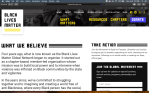
What is clear is what they say about themselves. These are screenshots, taken July 6th, 2020, from BLM’s own mission statement on their website. I encourage you to read them all.

The problem

There are many things in this mission statement that sound good, and even are good. But there are many false teachings mingled throughout and particularly hidden toward the end.

There is one paragraph that raises special concern for me. Right after claiming that they are “family-friendly,” BLM’s mission statement reads:

We disrupt the Western-prescribed nuclear family structure requirement by supporting each other as extended families and “villages” that collectively care for one another, especially our children, to the degree that mothers, parents, and children are comfortable.

There are things about this statement that sound good. It sounds right to “[support] each other as extended families and ‘villages’ that collectively care for one another.” It sounds child-focused.

Indeed, we all ought to love and care for one another. The story of the Good Samaritan teaches us that the commandment to love our neighbor applies to everyone around us.

But this half truth masks the evil motive ahead of it: to

“disrupt the Western-prescribed nuclear family structure.”

The doctrine of the family

However, we know that the nuclear family (meaning, a husband and wife and their children) is central to God’s plan.

From comeuntochrist.org, we learn:

“God made it pretty clear that families are important when he created Adam and Eve. The Holy Bible calls them “man and . . . wife” (Genesis 2:25), and the first commandment God gave them was to have children (see Genesis 1:28).”

comeuntochrist.org

Indeed, our ordained apostles still stand by this statement declared over 20 years ago in “The Family: A Proclamation to the World:”

The family is ordained of God. Marriage between man and woman is essential to His eternal plan. Children are entitled to birth within the bonds of matrimony, and to be reared by a father and a mother who honor marital vows with complete fidelity.

The family described here is plainly the same as the nuclear family. According to this statement, the nuclear family is part of God’s plan, and all of His children are intended to live in families.

If the Proclamation is true, then BLM, according to its own mission statement, is certainly anti-family, anti-God’s plan, and, therefore, anti-Christ.

If you don’t know if the Proclamation is true, it is critical that you find out for yourself. A testimony of spiritual things only comes from God. (Moroni 10:4-5)

Other issues with the statement

Let us further dissect just the phrase, “We disrupt the Western-prescribed nuclear family structure requirement.”

Oppression

For one, the statement uses the words “prescribed” and “requirement” when describing the nuclear family. It paints a very oppressive, restrictive picture of the family.

Who else talks like this about God’s plan?

Consider these statements from Korihor:

13 O ye that are bound down under a foolish and a vain hope, why do ye yoke yourselves with such foolish things? Why do ye look for a Christ? For no man can know of anything which is to come;

24  Ye say that this people is a free people. Behold, I say they are in bondage..

Alma 30:13, 24 (emphasis added)

In every era, Satan will try to make true doctrine and the Lord’s commandments seem oppressive. But the Lord offers truth to give us peace, and His commandments will keep us free from sin.

Western?

With simple logic, the proposal that the nuclear family is “western-prescribed” is ludicrous. The nuclear family is outlined in the oldest book known to man, the Bible, which is, in origin, a eastern book. Plus, the nuclear family is still the standard for most cultures all over the world today and has been throughout history.

Where are the dads?

Finally, I am troubled by the subtle trick of language in the last bit of the paragraph:

“We disrupt the… nuclear family… by supporting each other as extended families and “villages”… to the degree that mothers, parents, and children are comfortable.”

Why does the second item not read “fathers?” In fact, despite many mentions of mothers, women, and even “trans women” in the mission statement, the word “father” does not appear even once.

I worry that this institution, and many entities in our culture, are erasing the role of fathers in society.

Why is this an issue?

Well, we could talk about the statistics that show that a father present in the home makes the biggest difference than any other single factor when determining success by nearly any standard. (Focus on the Family)

But I see it more important to prioritize the doctrine.

According to the Family Proclamation, “Husband and wife have a solemn responsibility to love and care for each other and for their children.” 

Fatherhood is not disposable to our society because it is essential to our human race. Our God is our Father: “It is significant that of all the titles of respect and honor and admiration that are given to Deity, He has asked us to address Him as Father.” (“Father, Consider Your Ways,” Ensign, 2002)

Fatherhood, like motherhood, is next to godhood. It is a part of becoming like God. Becoming like Him is the purpose of our existence: “For behold, this is my work and my glory—to bring to pass the immortality and eternal life of man.” (Moses 1:39)

You might say it is good to focus on mothers and women. They have more needs, you might say. I think women in this world do have many needs, and Satan is surely attacking us ferociously as well. But I feel that one of the worst things he has done to us is convince us we don’t need men. We both need each other, and our children need us both, too. (See “United in Accomplishing God’s Work,” Joy D. Jones

Other attributes of an Anti-Christ

There is a lot more I could say about identifying BLM as an Anti-Christ, but I feel satisfied having issued a warning and explained some major points. Here are some other attributes of Korihor that I selected that I encourage reading more about and considering with regard to BLM’s mission statement:

  1. He mingles truth with false teachings (Alma 30:25)
  2. He preaches against the prophecies of Jesus (Alma 30:6, 14)
  3. He denies consequences and says “there is no crime” (Alma 30:17)
  4. He claims that others are “bound” and “in bondage” (Alma 30:13, 24)
  5. He teaches others to turn away from the “foolish traditions of their fathers” (Alma 30:14)
  6. He rejects the atonement and claims that “ye see a remission of your sins” (Alma 30:16-17)
  7. He seems to target women (Alma 30:18)
  8. He makes others lift their heads (Alma 30:18)

Why do I say this

I have really hesitated to make the claim that BLM is Anti-Christ.

But any defamation or discrimination I receive for having posted this is worth my clean conscience that I have done my part to share with my fellow saints what I have discovered. Let us not forget that we are waging a spiritual war here on earth, and we need discerning, high-quality intelligence about the Enemy’s plan. (See “War in Heaven,” Gospel Topics)

I feel it my duty as a warrior of Christ to raise the alarm when I believe an attack has been initiated.

I think there are many who would hesitate to promote or donate their money to BLM if they knew what I have just shared with you about it.

At risk of undermining myself, I recommend you play devil’s advocate when reading this and anything that tells you what to think. I encourage you to read Alma 30 and BLM’s mission statement on your own and see what parts I didn’t include, because the list is just too long to include everything. Do your own research to see what things might help paint a more full picture of this. As always, leave a respectful comment pointing out additional or opposing points.

What have I missed?

You tell me. What am I not considering, either in argument for or against BLM, the organization? What other things have you identified as Anti-Christ? Why?

On Little Missions, Fighting Racism, and Why This Prolifer Quit Being a Live Action Ambassador

A year or two ago, I stumbled across the Instagram page of Live Action, perhaps the largest and most legitimized prolife organization in the country. They are dedicated to educating society about prenatal science and the reality of abortion. I was shocked as I learned more and more about what was going on around me, all while everyone went on with our lives.

So I did what any respectable semi-millennial/semi-gen-z person would do.

I conducted extensive internet research.

And I began to share and share what I found all over my social media networks.

Then, I began to ask myself what more I could do.

I applied to become a Live Action Ambassador and was accepted. From there, I was sent exclusive emails with training and steps of how to get the word out, as well as other resources for initiating local events. 

After just a few weeks in the private Ambassador Facebook group, however, I started to feel uncomfortable.

At first, I loved being in a group who believed in fighting for the life of the unborn and who were so passionate about it. I learned from them, too.

However, I realized I did not like the way some people began to talk about outsiders, and even about prolifers who did not hold the exact same dogma. It was an echo chamber of confirming beliefs, which led to little tolerance for even slight disagreement. 

While most people were kind and intelligent, a few people used flippant, inconsiderate language used to debunk prochoice statements or accounts—really, they weren’t debunking, they were just name-calling or teasing.

Many of these people put their adherence to fighting abortion ahead of anything and everything else. Even worse, I worried that I too would or had put evangelizing the prolife worldview over evangelizing the Gospel.

So I took a small step back, and I left the Ambassador group.

What I Learned

Mainly, I learned to be careful when jumping on a bandwagon, especially an emotional one.

I still fully believe the prolife perspective to be the correct and virtuous one, and I still seek out ways to stand up for the unborn. (See “Abortion: God’s Word Cuts Through the Fog”)

I also still generally agree with most claims by Live Action, and perhaps I should have remained in their Ambassadors’ group.

But I now have an increased, prudent wariness of groupthink. Groupthink is a phenomenon that occurs when a likeminded group of individuals depend too much on their group identity and fail to use their individual thought, often leading to poor decision making.

Also, after seeing what an ideological echo chamber can do with your ability to respond calmly, kindly, and logically to another point of view, I’m also doing my best to identify and keep in check any unhealthy, negative emotional response I might have toward others when they propose opposing ideas.

I believe any group, regardless of the correctness of their cause, is prone to both of these issues.

Politically?

There are many good causes to get on board with, and we should have opinions on important issues that are formed with a scriptural, Godly lens. We should even take action as inspired by the Spirit.

But I recommend caution when considering what ship to get on and how far you will sail with it.

Draw lines between ideologies and entities to which you subscribe.

This doesn’t mean you can’t choose to be a part of a political campaign, protest, or movement!

But know your boundaries. There is a difference between a principle and a person. You can keep your perspectives without getting or staying behind a candidate, group, or organization.

Above all, prioritize your commitment to God over your commitment to any entity—or ideology.

Religiously?

There is only one organization that I deem worthy of my guaranteed, lifelong membership and eternal commitment, and that is the Church of Jesus Christ of Latter-day Saints, the only church with direct authority from Jesus Christ. The mission of doing His will on this earth in this life is worth any challenges.

Let me be clear: this doesn’t mean I’m not wary of cases of groupthink and hostility within the Church. I think they can and do happen among members, especially online.

However, I have a strong testimony of the Restoration of the Gospel and Church of Jesus Christ, that He leads His Church, and that He moves in and through His Church to bring about His will.

That’s what makes the risk both minimal and worth it, as long as we, members of the Church, are striving to be like Christ in idea, behavior, and treatment of others.

What Is Your Mission?

These words about Alma on his mission have been replaying in my ears in the last several weeks:

“And now, as the preaching of the word had a great tendency to lead the people to do that which was just—yea, it had had more powerful effect upon the minds of the people than the sword, or anything else, which had happened unto them—therefore Alma thought it was expedient that they should try the virtue of the word of God.”

Alma 31:5

I believe we were given callings for your life on Earth, to which you may have even been foreordained. (See “Foreordination,” Gospel Topics) They are causes about which you are passionate, ways for you to bring about good in the world. I call these “little missions.” 

It’s wonderful to work in our little missions! I believe standing up for unborn babies is one of my little missions. Yours are probably different. For example, you might be passionate about stopping human trafficking, improving child literacy, promoting racial equality, or even taking care of dementia patients.

It’s okay to only have one or a few good causes as your little mission(s). God has given us unique strengths, but limited time on earth, so take advantage of it, and don’t spread yourself too thin.

Whatever it is, choose a mission, and ask God if it is a worthy cause. Then, consulting God on how to move forward, go and do good in that area.

Verily I say, men should be anxiously engaged in a good cause, and do many things of their own free will, and bring to pass much righteousness;

Doctrine & Covenants 58:27

As you move forward doing good, however, remember that you have only one, most important mission on the Earth. That mission, given to you before this Earth began, is to bring souls unto Christ. Those souls are, in order of your responsibility, yourself, your children, and everyone God places in your life.

There are a lot of ways to bring about good in this world, but none of them is as effective or important as the “preaching of the word,” which has “a great tendency to lead the people to do that which was just”. As I always say, Jesus solves all problems. Preaching His word will have “more powerful effect upon the minds of the people than the sword, or anything else”. (Alma 31:5)

Take a step back. Check yourself often. Are your little missions overshadowing your Mission? Do you talk, write, read, post, or share more about your mission than your Mission?

If so, don’t worry; I’ve been there, too.

Just step back from your little mission for a minute. Refocus on Christ. He will show you the way forward.

What Are Your Little Missions?

What are your little missions? How do you keep your little missions in check with your Mission?

Jesus Solves All Problems: Racism, Police Brutality, Looting, Rioting

Once I wrote a post called “Jesus Solves All Problems.” I still believe this is true.

With so many problems in the world right now, in the last few days and weeks, it’s hard to know how to answer them all. There are so many things to consider and paths we could take as we move to resolve them all. It is a daunting task ahead of us.

The most effective way, really the only way, is Jesus.

He brings love, peace, and fairness. He is the source of light, truth, and inspiration. Only through Him can we hope to find medical improvements, political solutions, and societal peace.

We need not fear

We are His people, the salt of the earth, the leaven in the bread. He has scattered us so we may work in and lift our communities to increase His influence in the world.

This is why, when we face challenges, we need not fear. But we do have responsibility to trust Him and ask for His blessing. 

We know Christ will save us in the end, but He also protects and comforts us in the meantime.

His atonement is eternal in nature, and, thus, effective, applicable, and active in every moment, before, during, and after our trials.

In the midst of fear, injustice, and violence, let us remember what He does for us now, during our trials.

Remember this story from the Book of Mormon, as taught by Elder Bednar:

An example from the Book of Mormon highlights the power of the knowledge of the Lord (see 2 Peter 1:2–8; Alma 23:5–6) to dispel fear and provide peace even as we confront great adversity.

In the land of Helam, Alma’s people were frightened by an advancing Lamanite army.

“But Alma went forth and stood among them, and exhorted them that they should not be frightened, but … should remember the Lord their God and he would deliver them.

“Therefore they hushed their fears” (Mosiah 23:27–28).

Notice Alma did not hush the people’s fears. Rather, Alma counseled the believers to remember the Lord and the deliverance only He could bestow (see 2 Nephi 2:8). And knowledge of the Savior’s protecting watchcare enabled the people to hush their own fears.

Correct knowledge of and faith in the Lord empower us to hush our fears because Jesus Christ is the only source of enduring peace. He declared, “Learn of me, and listen to my words; walk in the meekness of my Spirit, and you shall have peace in me” (D&C 19:23).

But can we hush the fears that so easily and frequently beset us in our contemporary world? The answer to this question is an unequivocal yes. Three basic principles are central to receiving this blessing in our lives: (1) look to Christ, (2) build upon the foundation of Christ, and (3) press forward with faith in Christ.

Elder Bednar, April 2015 General Conference

Let us consider how we may apply the first principle, to look to Christ.

Elder Bednar goes on to use the example of Peter walking on water, who only began to sink when he looked away from Christ and at the frightful scene around him.

Now this is a great example, you may say, but what about when it is hard to see Christ in this situation? What if we may struggle to find Him, along with His comfort, counsel, and love, when there is so much fear, confusion, and hate?

It may be hard to have eyes to see, but we must pray for eyes to see Him and what He can do for you.

It helps me to remember the story of Elisha. Before now, I had never understood in any measure what it might feel like to be surrounded by an army ready to strike, but I’m starting to relate.

This is what happened when the prophet Elisha and his servant woke up to find the enemy, the Syrians, surrounding his city, Dothan:

Therefore sent [the king of Syria] thither horses, and chariots, and a great host: and they came by night, and compassed the city about.

And when the servant of the man of God [Elisha] was risen early, and gone forth, behold, an host compassed the city both with horses and chariots. And his servant said unto him, Alas, my master! how shall we do?

And he answered, Fear not: for they that be with us are more than they that be with them.

And Elisha prayed, and said, Lord, I pray thee, open his eyes, that he may see. And the Lord opened the eyes of the young man; and he saw: and, behold, the mountain was full of horses and chariots of fire round about Elisha.

And when they came down to him, Elisha prayed unto the Lord, and said, Smite this people, I pray thee, with blindness. And he smote them with blindness according to the word of Elisha.

2 Kings 2:14-18

Elisha’s servant was fearful. But he turned to someone who could commune with God for help and answers.

Elisha doesn’t even seem phased.

What can we do?

So what can we do when we are like Elisha’s servant? We can turn to the prophet of the Lord for counsel and guidance, and the words of other servants of God as found in the scriptures.

For instance, we can be grateful for the guidance President Nelson gave on June 1st, 2020, in response to current events.

We can also ask the Lord in prayer to open our eyes to see that He is there, that He has sent help before we even knew to ask for it. We may or may not see legions of angels, but I trust that we will feel their presence as well as the love and power of God’s hand.

Once we exercise faith to begin to “Look unto [Him] in every thought; doubt not, fear not” (D&C 6:36), he will give us strength and knowledge sufficient to hold our gaze and come unto Him.

Photo by Aaron Burden on Unsplash

Furthermore, it is essential to remember that the Lord did not only open the eyes of the servant to see the army of angels around them. When the faithful prayed for aide, He blessed them. We can have faith that, someday, the Lord will liberate His people and answer their prayers.

We may not be a prophet or apostle of the Lord like Elisha or Elder Bednar, but we do still have responsibility as members of His Church. We also are entitled to certain blessings. Elder Uchdorf taught:

Brothers and sisters, we are charged with studying the word of God and heeding the voice of the Spirit, that we may “know the signs of the times, and the signs of the coming of the Son of Man.” (D&C 68:11)

We are, therefore, not ignorant of the challenges of the world, nor are we unaware of the difficulties of our times. But this does not mean that we should burden ourselves or others with constant fear. Rather than dwelling on the immensity of our challenges, would it not be better to focus on the infinite greatness, goodness, and absolute power of our God, trusting Him and preparing with a joyful heart for the return of Jesus the Christ?

As His covenant people, we need not be paralyzed by fear because bad things might happen. Instead, we can move forward with faith, courage, determination, and trust in God as we approach the challenges and opportunities ahead.

Elder Uchdorf, April 2017 General Conference

We know we must move past our fear and act in faith.

Today

There are a lot of things that we could—and should—do to solve our problems right now.

Social media activism? Police reform? Peaceful protests? Violent protests? Unleashing the military to restore peace?

Unpacking these options and their varying levels of effectiveness, morality, and lunacy?

As much as I would love to do especially the latter, and perhaps will at a later time, I am prioritizing this post. I’m putting my money where my mouth is and standing by this claim:

The most important thing we need right now is Jesus.

Only He can replace anger with love. Only He can replace fear with comfort. Only He can replace death with life. Only He can replace devastation with hope.

Only He can truly heal hearts and nations. He is the source of truth and righteousness. He is the Prince of Peace, and He will someday return to reign over all creation.

I implore you to look to Him. Come unto Him. Let Him teach you, heal you, and comfort you from inside out.

Have courage

I would like to end with the recent promises, counsel, and apostolic blessing from the Prophet of our Lord Jesus Christ, who is, besides personal prayer, our most direct link to heaven in these dark times.

We pray that you will begin anew truly to hear, hearken to, and heed the words of the Savior. I promise that decreased fear and increased faith will follow.

Talk about the temple with your family and friends. Because Jesus Christ is at the center of everything we do in the temple, as you think more about the temple you will be thinking more about Him. Study and pray to learn more about the power and knowledge with which you have been endowed—or with which you will yet be endowed. …

Dear brothers and sisters, I express my love for you. During this time of tension and uncertainty, and invoking the authority vested in me, I would like to confer upon you an apostolic blessing.

I bless you with peace and increasing faith in the Lord.

I bless you with a desire to repent and become a little more like Him each day.

I bless you to know that the Prophet Joseph Smith is the prophet of the Restoration of the gospel of Jesus Christ in its fulness.

Should there be illness among you or your loved ones, I leave a blessing of healing, consistent with the will of the Lord.

I so bless you, adding once more my expression of love for each of you, in the sacred name of Jesus Christ, amen.

President Nelson, April 2020 General Conference (emphasis added)

As an aside, I also feel motivated to add that, if you do not currently have a testimony of the Restoration of the Gospel of Jesus Christ, now is a really good time to pray about it. Ask God in sincere prayer to know if this is Christ’s Church, led by a prophet and apostles who speak for Him on this earth. Once you know this for yourself, I promise you the greatest peace, comfort, and knowledge anyone has to offer. I can testify for myself that my connection with Christ, through His Church, has been my greatest and only real comfort in this time.

Your thoughts

How has Christ healed you? How are you looking (or how will you look) to Him at this time?

Don’t Be Afraid of the P Word – Why and How to Embrace Politics

A Facebook friend of mine recently made a post stating that she was tired of trying to understand politics and encourage productive dialogue. After feeling attacked by some friends commenting on her previous posts, she said she was no longer going to engage in such conversations and will only stick to posting strictly about her personal activities.

Another friend told me she avoids listening to or watching the news entirely. It’s too distressing, emotional, and confusing, so she doesn’t want anything to do with it.

And I used to not want anything to do with it!

I claim that we, as members of the Church, and especially as women in the Church, unjustly avoid politics when we should be using our political influence for good.

We have a responsibility to represent Him any chance we have and to use our influence for good, whatever influence that is, even at the cost of comfort.

Christians cannot be content with comfort

We avoid learning about politics because it is overwhelming, takes time, and can be controversial and uncomfortable. We avoid talking about it because, culturally, it is often a heated discussion and represented by deep rifts between two parties. We may worry we don’t know which side we fall on, or we don’t know if our friend is on the other side and might disagree with us or think us wrong or even evil for doing so.

Netflix is comfortable. Disney+ is comfortable. Food is comfortable. Not talking to strangers is comfortable. Talking about “The Office” is comfortable.

But we need to push ourselves a little harder than that!

I know politics are uncomfortable. But our culture is much too used to being comfortable.

Plus, many members of the Church are far too concerned with not upsetting anyone. We would rather call ourselves “Mormons” with a self-deprecating laugh than correct someone who does not use the correct name of the Church when referring to it or its members.

We need to be bold!

On my mission, I learned over and over again about being bold. Was I ever good at it? Honestly, probably not at all. But I want to be better, so here I am, testifying the best way I am able: in written word, to however few people will read it.

1) We should embrace learning about politics.

Now this account did cause the people of Mosiah to mourn exceedingly, yea, they were filled with sorrow; nevertheless it gave them much knowledge, in the which they did rejoice.

Mosiah 28:18

The people of Mosiah were eager to learn what had happened to the people of Jared. Even though it wasn’t easy to find out about their devastating destruction, they still felt joy in the knowledge they gained.

I know learning about politics is difficult. And it is completely possible that you really are at a time in your life when you need to turn down the voices on tv or limit your time reading newspapers.

But for many of us, it’s time to pick up the gauntlet to do the hard work of learning about the issues facing our communities and our country.  If we do so, I am confident we too will feel joy.

So find out about what’s really happening with abortion. Find out about what’s happening with human trafficking. Find out what’s happening with violence. Turning a blind eye to it will only allow evil to fester.

It’s uncomfortable. But if you can cut out a tv show, video game, or other distraction of little consequence from your life, you can find time to learn about the news and the stances of the politicians vying for your vote. Pray for the gift of discernment as you filter through the voices, seeking for a balanced diet of the most reliable sources on the left, right, and anywhere in between.

As you learn about politics, the most important thing is to stay close to your Heavenly Father. If you pair sincere prayer, diligent scripture study, and righteous living with an open mind and secular research, He can guide you to learn what you should learn and decide what is right.

God wants us to learn about politics. He cares about His people, and He certainly cares about His country.

Extra motivation for citizens of the United States of America

God has invested much into this country, and He is counting on us being stewards for Him. He wants us to defend and promote righteousness, and government can either do the same or stifle or punish righteousness. It is up to us to ensure our government sides with righteousness and with God in order to best bring about His will, provide a safe place for His Church, and protect all who follow Him.

77 According to the laws and constitution of the people, which I have suffered to be established, and should be maintained for the rights and protection of all flesh, according to just and holy principles;

78 That every man may act in doctrine and principle pertaining to futurity, according to the moral agency which I have given unto him, that every man may be accountable for his own sins in the day of judgment.

79 Therefore, it is not right that any man should be in bondage one to another.

80 And for this purpose have I established the Constitution of this land, by the hands of wise men whom I raised up unto this very purpose, and redeemed the land by the shedding of blood.

Doctrine & Covenants 101:77-80

2) We should use our influence for good by speaking, voting, and considering running for office.

After we prioritize learning about issues as well as the candidates for our local, state, and federal elections, and as we are continually prayerful, we should then use our influence to bring about good change and maintain moral standards.

I was on my mission during 2016, when the Church ran a religious freedom initiative, and when the First Presidency sent this letter reminding members about the Church’s political neutrality but urging them to be politically involved:

Participation in the political process affects our communities and nation today and in the future. We urge Latter-day Saints to be active citizens by registering, exercising their right to vote, and engaging in civic affairs.

We also urge you to spend the time needed to become informed about the issues and candidates you will be considering.

First Presidency Letter to the Church, 2016

I was happy to shrug it off, knowing that, as a missionary, I was supposed to focus on the work and leave behind things like dating, school, and politics.

However, in the next year or two, I learned to remember that Jesus Christ is at the head of His Church, and if He thought members of His Church needed to be politically informed and involved, it must be best for me and my fellow man (and woman).

I’d like to talk about 3 main ways you may do this: voting, speaking out, and running for office.

Vote

And thus they did assemble themselves together to cast in their voices concerning the matter; and they were laid before the judges.

Alma 2:6

Make sure you’re registered to vote, and then do it! Be well prepared by learning about the candidates and scheduling time to vote.

Every person who is able has a responsibility to be a part of defending our fellow man by voting to promote good in their communities for their fellow man.

Speak out

This is something everyone can do, but how you do it is up to you.

You don’t need to talk about politics every day. You don’t need to talk about it with everyone you know. You don’t need to post about it online. You also don’t have to attend protests or be a part of a formal movement.

In fact, there are many instances in which it is not necessary or good to talk about politics, and some of us might need to have a little more restraint in bringing it up.

But if you feel called to do so, do not fear! Do not always default to avoiding talking about politics, especially in appropriate settings with respectful friends and family.

Also, as you speak out, actively listen. Don’t be afraid of engaging in honest, open conversations. Listen to people with whom you agree and disagree. Try to understand where they are coming from. Be prepared to accept that you might be wrong sometimes and need to change your perspective or change your mind entirely. Remember that people who disagree with you are probably still good people with good intentions, and, in the end, you can agree to disagree.

In whatever way you speak out, for whatever cause, always remember to be Christlike and kind.

“… be ye therefore wise as serpents, and harmless as doves.”

Matthew 10:16

Run for office

This is not for everyone; before you run for any office, consult with God to see if this is a good path for you.

But if you feel that it is God’s will for you to run for a government office at any level, move forward with faith. God calls each of us to fulfill our individual missions as His children on this earth and as members of His Church.

3) Remember that Jesus takes priority over politics.

Divorce. Bullying. Poverty. Lack of education. Insufficient healthcare. Racism. Abortion. Anxiety and depression. Hunger. Homelessness. Pornography.

… each of these problems may have a number of effective, individual solutions. However, the only universal solution is Jesus.

How Jesus Solves All Problems

Government cannot be your religion. If you are more interested in talking about politics than talking about Jesus, something is wrong.

And if your time in the news and political research is pushing out your time in the scriptures, it may be time for a break from the news cycle to recenter on the Lord.

But Spack!, you may say. How can I take a break or turn down the volume on the news? Didn’t you just say it was my duty to serve others by being politically informed and active?

Only Jesus is the source of undeniable truth, the greatest love, and perfect peace. No party, candidate, or bill can ever do as much good as Christ can do in the hearts of those who know Him.

So make sure you know Him well, and that you seek to bring others to Christ in your home, community, and country.

Amidst all the confusion, anger, and injustice in government and communities everywhere, I find hope and courage in knowing that, someday soon, my Savior will return to this earth and reign as the Prince of Peace.

“It is perhaps less obvious to some that religion and morality play an essential role in maintaining and promoting good and effective government. The only real solutions to many of the serious problems facing our world today are spiritual, not political or economic. Racism, violence, and hate crimes, for example, are spiritual problems, and their only real solution is spiritual. …
“Societies depend in large part upon religion and churches to establish moral order. Government can never build enough jails to house the criminals produced by a society lacking in morality, character, and faith. These attributes are better encouraged by religious observance than by legislative decree or police force. It is impossible for government to control the attitudes, desires, and hopes that spring from the human heart. And yet these are the seeds that grow into the conduct government must regulate.”

“Religion and Government,” Elder Wilford W. Andersen, Ensign 2015

Additional reading

Your experience

What has been a barrier for you in learning about and being involved in politics?

Women Can’t Do Everything

I can’t do everything.

This has been one of the hardest and most valuable lessons for me to learn.

Let me explain.

Growing Up

I had some rockstar women to look up to. They seemed to be able to do everything!

For example, for as long as I can remember, my own mom has balanced raising 5 kids, working part-time as a nurse, making fitness a priority and exercise a hobby, helping neighbors, fulfilling callings at church, serving frequently in the temple, prioritizing date nights with my dad, and even honing her excellent cooking skills.

Holy smokes! She’s superwoman.

4-generation pic of my baby, me, my mom, and my grandma

They didn’t just set good examples; my parents and the other adults around me explicitly encouraged me to achieve my goals and follow my dreams. They were nothing but supportive as I dreamed of becoming a writer, then an illustrator, then a musician, then a teacher, then a writer again. I felt like I could do anything. (Of course, I knew I could never go far with sports, but I felt like I could do almost anything else!)

I knew I would succeed in college. I had had many wonderful teachers early on who believed in me and helped me focus on my successes. More than that, I had awesome parents who taught me at home to read and who pushed me to do my best in school to get good grades and really learn.

I also felt confident in my abilities to be a mother. I knew childbearing would be hard for me (I’m such a lightweight), but I had spent a lot of time nannying, babysitting, and tending my own younger siblings, so I felt like mothering was generally pretty much in the bag.

Come Spring 2019

I was just about set to graduate with my bachelor’s degree, with a near-4.0 GPA. I was working a great part-time job that wanted to take me on full-time, with great benefits! I had just gotten accepted into a graduate program.

By all outside measures, it seemed like my life was lining up perfectly for me to keep moving full speed ahead. I would be able to work in a job I enjoyed, support Matt through the end of his degree, and even afford diabetes supplies!

Taken spring 2019, right about this time.

So why did I hesitate?

I prayed and prayed about the decision to move forward. I felt loved, but heard the same thing over and over: no answer, no answer. Finally, right after graduation, I felt a small push to turn it all down.  

Very soon, I found out I was pregnant, and my life came to a crashing halt as I was practically bedridden for months. (The Truth About Pregnancy) I had to seriously cut down (again) on the things I could expect myself to do. A lot of days, taking a shower was my biggest accomplishment, and getting my husband to help me down the stairs for anything at all was an event.

As I very gradually gained a small amount of independency and ability, I reflected a lot on my previous worldview. I thought, maybe I can’t do everything. But slowly, I could start doing more things: going shopping, walking around, cleaning, working again.

But then, I was knocked down yet again after childbirth. My postpartum recovery was aggressive.

For a couple days after coming home from the hospital, I just cried in pain no matter how I lay, sat, or stood. For a couple weeks, I had frequent, sporadic anxiety attacks (and couldn’t get in to a health professional). To make matters worse, my baby had a really hard time breastfeeding and sleeping. I really wasn’t at all better until about 8 weeks later, my baby didn’t really get any sort of consistency with eating until about 6 weeks, and we only just began sleeping on a healthy schedule at about 10 weeks.

Really, I still couldn’t do anything else but try to help both of us survive. Yet for some reason, just a week or two after birth, I tried, to great cost and little success, spending any energy on getting my business up and running again!

I could see even more clearly that I could not do everything.

Now that things have calmed down significantly, I have decided to remember my list of priorities: 1) God; 2) husband; 3) baby. Everything else comes after.

As I’ve tried (imperfectly) to make each day reflect these priorities in order, I’ve seen a big difference in how I feel, as well as how much I can do in a day. God makes enough time in my day and gives me enough energy to do the most important things each day.

Is there a point to all this?

A favorite line from this most recent general conference was from Sister Joy D. Jones, Primary General President:

“Women wear many hats, but it is impossible, and unnecessary, to wear them all at once.”

I had been saying the same thing for awhile, except I said:

Women can’t do everything—but we can do anything.

Let me be clear: I do believe women can have awesome careers, do a great job serving in the Church, be wonderful mothers and wives, hold public office, break records, and do pretty much anything.

But no one woman—or man, for that matter—needs to do all these things, and certainly not all at once. But we can do anything—any good thing that God asks us to do.

That’s how my husband and I have a family motto: “I can do anything good!” It is derived from this inspirational video:

Being brave

“The Spirit helps us determine which work to focus on today.”

Joy D. Jones, April 2020

I believe God will teach us what we must do “today,” whether that means literally the 24-hour period of today, or any other current period: this week, this year, during college, for retirement, or for our whole lives.

I have faith in an eternity when I can really do everything, or at least every good thing. For now, I’m learning to be content with the few things I can do at this point in my life.

So let’s stop telling women that they can do everything. I believe that female empowerment has gone too far, going from encouraging women to do anything to pressuring women to do everything. This is only going to chase our happiness out of reach, give us unrealistic expectations for ourselves, and ultimately oppress from within.

I think it best that we seek to abide by the advice the Lord gave to Emma Smith:

“… lay aside the things of this world, and seek for the things of better.”

Doctrine and Covenants 25:10

The truth is, some things are not worth our time today or perhaps ever in this life. And some things critically require our time right now.

Be brave enough to accept that you can’t do everything. Be patient with yourself when you find you fall short. More than anything, trust in God that He will help you identify and do the most important things. I know that His grace will make up for your insufficiency, as it has mine.

Additional study:

Good, Better, Best, Elder Dallin H. Oaks, October 2007

Do you agree?

As others encourage you, have you also felt expectation overwhelm? Have you learned, as I have, to give up some endeavors for the most important things? What were they, and how?

COVID-19 and Anxiety: “Who Knew It Only Took a Worldwide Pandemic to Manage Your Anxiety?”

“I’m really surprised how well you’re taking all of this. Who knew it only took a worldwide pandemic to manage your anxiety?”

That’s what my husband told me over dinner on Thursday, March 12, 2020 (otherwise known as the day the world began to stop).

He was teasing, but he was also kind of right. My anxiety was unusually low for a normal day, let alone such a crazy one. And since then, it’s mostly fallen somewhere between low and normal.

I’ve been trying to understand why I, a person who is prone to intense anxiety, has had fairly optimal anxiety levels, even though much of the world is panicking, and for good reason. COVID-19 is a real threat to physical health, economic health, and even life. So why am I not so afraid?

Here are a few possible explanations (in ascending order of seriousness):

1) Not Compensating

I’ve always been anxious about being around crowds, touching, having unwashed hands, sharing germs… you get the picture. Having a newborn during the middle of an aggressive sick season has just exacerbated those anxieties.

Now that everyone else is as concerned as I already am about these things, I can let down my guard just a little bit. I only need to focus on myself; my anxiety can stop compensating for every single other person around me, too!

2) Celebrating the Good

I’m used to managing my anxiety by always having things to look forward to. So when I learned that Corona meant my husband would be doing online school for the rest of the semester, I let myself be excited! My love language is quality time, and I was happy at the prospect that he might be home more than normal.

It’s a really small bright side, compared to the real danger of COVID-19. But this is already how I have learned to cope.

3) Gaining New Perspective

“And we know that all things work together for good to them that love God, to them who are the called according to his purpose.”

Romans 8:28

I took peace in being granted eyes to see that God was taking care of us temporally. The event of Coronavirus is one of a few life events that seem to be a moment of clear reflection, as if my life is a long hike, with just a few tall ridges along the way that permit me to see just how high up and far I have come.

As poor college students, money has been one of my biggest anxiety-stimulants. I didn’t know how we were going to survive through the end of the semester! I had been worried for weeks (really since finding out I was pregnant) about how we were going to pay the lofty, looming hospital bills for our baby’s birth. Finally, about 6 weeks after she was born and about a week before Corona really struck, we miraculously got everything paid for.

That same week, we unexpectedly came into the money to pay for our housing through the end of the semester, and we learned we were going to receive a good-sized tax return.

One of those very last days of normal life before Corona, I felt like I had a huge wad of cash burning a hole in my pocket! I said, “Matt, why don’t we go pick up dinner tonight?” My wise husband said we could if I really wanted to but gently suggested we save the money for now and avoid impulse buying. I knew he was right, so we made some soup at home instead.

It was just a couple days later that I felt that God had taken me by the hand on my long hike and said “Look what I did for you!,” pointing over the ridge to see the winding path we had taken to come this far. I am grateful that sometimes, God does let me see some of what He’s done for you, and I take comfort in the reminder that I can trust Him to continue to do things for my good.

The hike my husband took me on to propose to me! This was taken just a few minutes before.
(He just had to surprise me by letting me go without makeup!)

4) Finding Peace in the Perspective I Had Long Since Gained

“My son, peace be unto thy soul; thine adversity and thine afflictions shall be but a small moment;

“And then, if thou endure it well, God shall exalt thee on high; thou shalt triumph over all thy foes.”

Doctrine and Covenants 121:7-8

I am so grateful for the perspective I have been granted from learning the Plan of Salvation and gaining an understanding of what Christ has done for me. (“Plan of Salvation“, Gospel Topics) I am confident that my life did not begin at birth, nor will it end at death. I trust that I will see my loved ones again after this life. I have faith in the Resurrection of my own soul.

Sure, Corona may really suck to get, and I definitely would miss any family member who I lost. But of all the things I fear, I do not fear death.

5) Feeling Hope for a World in Sin

“’And the glory of the Lord shall be revealed, and all flesh shall see it together’ (Isaiah 40:5). He will rule as King of Kings and reign as Lord of Lords, and every knee shall bend and every tongue shall speak in worship before Him.”

Jesus the Christ

Our world is in great sin. Historically, this has indicated that the Lord sees fit to send challenges meant to humble us and turn us to Him.

I am hopeful more that this disease leads many to humility and repentance through Christ, that they may find eternal happiness now and in the life to come. If anything, in the grand scheme of things, this might be a blessing for mankind and for my own soul.

Most of all, I am excited that this may mean we are just one step closer to the return of the Messiah, the Redeemer, the King of Kings, who will soon come to rule and make right all that is wrong. Finally, everyone will know the truth and joy that comes through Christ.

So How Are You Doing?

Do you feel like you are managing your new or longstanding anxiety in the middle of all this? What things, if anything, are helping you find peace?

The Right Time to Have Kids

I just gave birth to a sweet baby girl (thus the hiatus in blog post production—my apologies). Our little one is a blessing, but she is also my biggest challenge yet.

I never thought I would be one to get married so quickly (click to read about that story), and I had similar expectations with having my first baby. 

But here we are with our first baby, months away from our second anniversary. We’re waiting for my husband to finish his bachelor’s program and living in a tiny on-campus apartment. And frankly, we’re dirt poor.

The arrival of our sweet little one in what might be considered untimely circumstances has inspired many to ask us: “How did you decide it was time to have kids?” Most of the people who have asked this question are also young couples; many are openly considering having children and wanted to pick our brains as they are asking themselves the same question.

Well, I’ll tell you, but in order to give a proper answer, I must first address the bigger question: When is it God’s time for you to have kids? What does He say about it?

When Does God Say Is the Right Time to Have Children?

For your convenience, I have accumulated some of the most important words of divine counsel that impacted me when I asked myself this same question. I endorse these sources as recommended reading for anyone, but particularly for married couples who have not yet decided to begin trying to have children.

I do not intend to place guilt on those who are already trying unsuccessfully, thus far, to have children. 

It is essential to first remember that the “first commandment that God gave to Adam and Eve pertained to their potential for parenthood as husband and wife. [Modern prophets and apostles] declare that God’s commandment for His children to multiply and replenish the earth remains in force.” (The Family: A Proclamation to the World)

I have heard many say that people (especially women) need to achieve certain personal goals before having children. (E.g., claims that one must achieve X level of education before having children, or attitudes of superiority over a parent who went straight to full-time parenting.) That manner of thinking might indicate that you prioritize other, worldly things before family and God’s command, and that you have fallen for Satan’s lies:

Satan seeks… to discourage childbearing (especially by parents who will raise children in righteousness).

Elder Oaks, October 1993 General Conference

But wait!, you might ask, when is waiting or choosing to not have children a good idea? Surely there are times when it’s best to not have children (besides out of wedlock, of course)!

I actually discovered the best answer to this question in the Gospel Topics essay titled, “Birth Control:”

Those who are physically able have the blessing, joy, and obligation to bear children and to raise a family. This blessing should not be postponed for selfish reasons. … 

Husband and wife are encouraged to pray and counsel together as they plan their families. Issues to consider include the physical and mental health of the mother and father and their capacity to provide the basic necessities of life for their children.

Decisions about birth control and the consequences of those decisions rest solely with each married couple. Elective abortion as a method of birth control, however, is contrary to the commandments of God.

”Birth Control”, Gospel Topics

The part that stands out to me is “selfish reasons.” Ask yourself: is your reason to postpone childbearing actually a reflection of a selfish desire?

Most importantly, I wish to reiterate the words of Elder Anderson:

“When to have a child and how many children to have are private decisions to be made between a husband and wife and the Lord. These are sacred decisions—decisions that should be made with sincere prayer and acted on with great faith.”

Elder Anderson, October 2011

Ultimately, the decision is personal, between you and the Lord. It is not my job (or anyone else’s!) to say when you should have children—nor is it any of your business to know why we decided to have a baby when we did.

On that note, I’ll tell you my story! (Okay, at least a little slice of the story.)

How Did We Know It Was the Right Time to Have Kids?

For both Matt and me, it was a gradual decision. We already knew we wanted some number of children at some time. However, we also had concerns about adding to our family so soon, and we had to address each of them thoughtfully, as a couple and individually, and in prayer.

We analyzed each concern one by one, asking ourselves questions like the following:

  • What are my reasons to wait?
  • For each reason to wait, what is at its root: faith or fear? Is it a concern I have because I don’t trust God, or because I’m really trying to do what He wants?
  • Is this reason a rationalization?
  • If this reason is not rooted in fear, and it is not a rationalization, what can I do to resolve this concern? How can I begin now to remove or diminish it as a valid concern?

After answering these questions, we could then place each concern into one of the following categories:

  • Not a valid reason to wait
  • A valid reason to wait
    • If a concern fell into this category, we had to ask ourselves: can it be resolved? How can we begin now to resolve that concern?

For instance: Money

For example, money was a concern for us. We were both paying for school and working part-time. We worked hard to budget our money, but our expenses were very high, especially with diabetes costs.

How would we be able to afford a child?

This is a shot from one of our date nights about a year ago. Because money can be hard to come by, sometimes we just visit Deseret Book for a couple hours and admire the artwork and read excerpts from books we would like to own someday.

However, with prayer, study, and reflection, we decided that this concern was, for us, not a valid reason to wait.

We had already learned that money was something we could trust the Lord to figure out. We remembered that He had cared for us when we couldn’t afford a place to live for several weeks between our wedding and when we moved back to school; He had blessed us with a cheaper situation and nicer place to live than we ever could have imagined.

Of course, we knew there were things we could and should do to be financially prepared; we worked hard at our jobs to ensure maximum income, practiced self-control in our spending, and tried to put aside just a little each month into savings.

It took some time to come to this conclusion. It took even more time to come to—and accept—conclusions about other concerns we had.

Most of the concerns we had required little or nothing to be resolved, other than to acknowledge that we could move forward with faith, not fear. There were a couple things we needed to address to prepare us to have children. We gained the faith to tackle these concerns and actively prepare ourselves.

So Basically…

Draw near unto me and I will draw near unto you; seek me diligently and ye shall find me; ask, and ye shall receive; knock, and it shall be opened unto you. 

Doctrine and Covenants 88:63

I can’t tell you when to have children or how many. You can’t tell me, either!

But I feel confident in testifying that, no matter who you are, in whatever walk of life, wherever you are in readiness to have children, the most important thing is to stay close and get closer to God at all times. As you immerse yourself in His word and in prayer, He will have greater power in your life, and you will have greater ability to understand what He wishes for you and your family.

7 Tips for Successful Come, Follow Me Personal Study in 2020

Welcome to 2020! New year, new decade, new you!

This is your chance to make a fresh start on your workout and diet plans, your mental health, your grades, your business, and practically anything else about you!

In the midst of making (and hopefully beginning to keep!) all these resolutions, put this among the top of your goals: improving your Come, Follow Me study. 

I’ve heard many friends, family members, and acquaintances express the same sentiments: “I started out Come, Follow Me last year with such great intentions! I was so excited to do it! But a few months later, I realized my studies had lost vigor and petered out. By the end of the year, I felt so behind I went weeks or months without even opening it up.”

My own Come, Follow Me studies became less intentional, too. I continued to do it all year, but my studies became increasingly sporadic. I regret to say I barely wrote anything down from my personal studies, despite my intentions to record my thoughts.

This is your year

“’Come as you are,” a loving Father says to each of us, but He adds, “Don’t plan to stay as you are.’”

Elder Jeffrey R. Holland, April 2017 General Conference

Don’t spend another minute feeling guilty about a less-than-satisfactory year of Come, Follow Me! Repent now and start fresh. God will take you how you are and help you become more!

This first week, I have already found it easier to devote more time and intention to Come, Follow Me. Last year, I felt my study time was torn between studying the Book of Mormon daily (as we should) and studying the New Testament as guided by the Come, Follow MeFor Individuals and Families: New Testament 2019 manual. This year, I love getting to put all that time together for one deep, unrushed study.

I consider this year’s Come, Follow Me curriculum a blessing to all of us to fulfill both charges of study at once. I also consider it a great opportunity to learn from the Book of Mormon more deeply than ever before. 

“… I promise that as you prayerfully study the Book of Mormon every day, you will make better decisions—every day. I promise that as you ponder what you study, the windows of heaven will open, and you will receive answers to your own questions and direction for your own life. I promise that as you daily immerse yourself in the Book of Mormon, you can be immunized against the evils of the day, even the gripping plague of pornography and other mind-numbing addictions.”

President Russell M. Nelson, October 2017 General Conference

7 Ways to Improve Your Personal Come, Follow Me Study in 2020

Whether you have consistently held personal studies of the Come, Follow Me curriculum all last year or didn’t even touch it once, each of us can seek to improve our studies.

I find there is value in changing up my approaches to scripture study. There is no one perfect way to study, but there may be ways that will help you get more out of it, even if just for a day, week, month, or year. I encourage you to try one or more of these ideas and observe any changes in how you feel or what you learn.

As always, pray for the Spirit of Discernment; ask the Lord to help you choose which of these things—or what other thing(s)—you should do.

#1 – Incorporate Prayer

“Blessings require some work or effort on our part before we can obtain them. Prayer is a form of work and is an appointed means for obtaining the highest of all blessings.”

Prayer, Bible Dictionary

Among the many blessings that come from prayer, praying will enhance your scripture study experience.

Ask the Lord to help you understand what you are reading, find answers to your questions, know how to make important decisions in your life, feel His love, and/or have a greater focus and desire to learn as you read. Thank Him for the things you learn. 

If you already hold a personal prayer along with your personal scripture study, try to improve your prayer experience. For example, consider offering a vocal rather than mental prayer. This could help you focus on the words you say rather than repeating a rote prayer.

If you don’t already incorporate prayer in your Come, Follow Me studies, begin now! Begin your studies with a prayer, finish them with a prayer, or do both. You might even choose to hold a prayer in the middle of your studies!

However you do it, incorporating prayer in your personal studies (or reincorporating it in a new way) can help you focus your studies, invite the Spirit and personal revelation, and learn from the scriptures.

#2 – Use a study journal

“Knowledge carefully recorded is knowledge available in time of need. Spiritually sensitive information should be kept in a sacred place that communicates to the Lord how you treasure it.”

Elder Richard G. Scott, October 1993 General Conference

The Come, Follow Me manual frequently suggests journal-writing prompts, and many Church leaders have encouraged us to record our spiritual experiences and impressions. Writing impressions as you study shows the Lord that you are listening for revelation and want to remember it when it comes. It can also lead you to further revelation and insights.

If you don’t regularly use a study journal, set a goal to do so. Make that goal your own! My current goal is to write at least one take-away every day directly in the manual. You might choose to write in a separate journal, use the Gospel Library app to record your entries and study notes, or record your impressions another way.

If you already write in a study journal, ponder how you might improve your journal method. Pray for revelation on how you could use it better.

#3 – Scavenger hunt

Give yourself a goal for your studies. This goal might stay the same all year, or it might change day to day or week to week.

Making a “scavenger hunt” out of your studies may help you mentally engage in your studies, especially if you struggle holding your focus. If you choose, it may also be a way for you to answer any doctrine- or faith-related questions you have and/or strengthen your testimony in an area in which you don’t currently feel confident.

This might look like searching for and marking a favorite verse or line each day or week that you study. You could also choose a theme to look for or a question to try to answer every time you read.

#4 – Purchase a study book

God doesn’t require us to spend a minimum amount of money to successfully study the scriptures. However, there are many study helps available to enhance your studies. If you have the means and feel so prompted, even a small purchase could help you to feel more committed to your scripture study.

For example, I set a goal of writing in my Come, Follow Me book every day during my personal studies. To achieve this, I purchased my own personal copy of the book in Spanish. Even though it only cost a couple dollars, I have (at least in these first few days) felt committed to making that investment worth it. I’ve seen huge contrast between this and last year, when I barely touched the physical copy of the Come, Follow Me manual that was given to me for free.

A journal edition of the Book of Mormon features extra space to write impressions as you study

You may choose to purchase one or more of the following:

#5 – Switch scripture/manual/journal format

One thing that has made a big difference in maintaining and improving my studies over the years is periodically changing the format of my studies. I mean by this that, when I feel my studies are becoming rote or lacking, switching from paper to digital scriptures or notes, or vice versa, helps me reengage in my studies and benefit in new ways.

Some people would disagree with this method, believing there is just one best way to study. For example, many have strong opinions regarding digital scriptures; some condemn them, and some think they are the only way to get a deep study of the scriptures!

While there really might be a “right way” for some individuals, I believe each has its advantages. For example, for me, digital scriptures have the potential to be more distracting, but I’m more likely to click on the footnotes, search for a term, or write a note on a verse. On the other hand, my physical scriptures may be easier to focus on, but I am unlikely to search for terms or follow any cross-references.

Similarly, I’ve seen switching between a physical and digital study journal has done a lot to change my approach to my note-taking, with pros and cons to both. Either way, the act of switching refreshes my experience of journaling my impressions and helps get me out of a rut in my scripture study.

If you think your Come, Follow Me study could use a little refresh, try switching the format of your scriptures, manual, and/or journal. You can try any combination of these, too. It might look like any of the following: 

  • Physical scriptures and manual with a text document on your laptop for notes
  • Paper journal with digital scriptures and manual
  • Audio (digital) scriptures on your phone alongside your physical manual and journal
  • Some other combination

#6 – Set a goal to share what you are learning

“Oh, if I could teach you this one principle. A testimony is to be found in the bearing of it!”

Elder Boyd K. Packer, General Conference 1983

There are a number of reasons sharing what you are learning might help you. I have noticed that setting a precedent to share what I’m learning in my scripture studies helps me feel accountable to focus on finding something worth sharing.

And, of course, sharing what you learn will solidify your understanding and belief in those things. As you hear yourself say what you believe, the Spirit will bear stronger witness to you that it is true.

Prayerfully make your own goal and plan to share what you are learning in your personal Come, Follow Me studies. Here are some ways you might do this:

  • Share your thoughts in a personal blog 😉
  • Post on social media every day or week, highlighting a verse or line that stood out to you and why
  • Make a shared online document or group chat with your family members or other study partner(s) and share what you find in your personal studies – my husband and I have just begun a shared iPhone Note in which we add to a list of verses that add to our Faith in Jesus Christ, based on the recommended personal study activity in the first week’s Come, Follow Me chapter.
  • Share your testimony of what you learn from your studies in fast and testimony meeting at church
  • Prepare and commit to sharing at least one comment each Sunday School class

#7 – Pick a setting and keep a routine

Choose a consistent, daily setting for your scripture study. Try to pick a place you won’t be interrupted or distracted.

If you already do this, but you think a change of setting would help you refocus, try finding a new place, choosing a different time, or extending the amount of time you study. Commit to being in a certain place every day at the same time for your daily personal Come, Follow Me studies.

These are a few settings I have chosen with at least good success:

  • After getting ready in the morning, sitting at the kitchen table as I eat breakfast
  • At night, in bed, before reading for fun and going to sleep every night (it worked until I stopped having time for fun reading and became a morning person)
  • At a study desk at home after lunch
  • At the institute building in a general quiet study area for an hour before going to class (my personal favorite)
  • (Not really a setting, but another tip for any other crazy Type As out there: It also helps me to add “scripture study” to my list of to-dos each day in my planner!)

What else?

What other tips would you give someone else looking to start or improve their Come, Follow Me personal study? What is your plan to start or improve your Come, Follow Me study in 2020? Comment below!