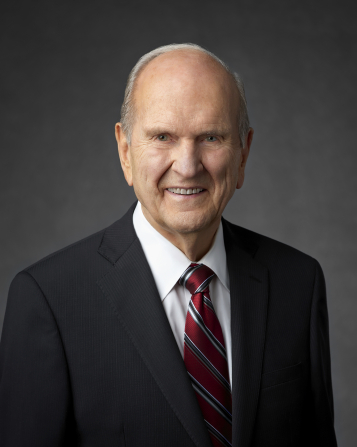

Abortion: God’s Word Cuts Through the Fog

A guide for any open-minded person who wishes to let the Lord frame their opinion of abortion.

I have much I would like to say personally about abortion. I could also find numerous sources to support my (and, really, any) opinion, or I could heavily research current and historical legal action regarding abortion. For this post, however, I would like to focus primarily on what the Lord has revealed to us regarding abortion.

These days, it seems everybody has an opinion about abortion. A few lie on the extreme “prolife” end of the spectrum, urging that abortion be unthinkable and illegal in every case everywhere, and a few on the extreme “prochoice” end, pushing the social and legal acceptance of abortion through the entire nine months of pregnancy for any reason. Most find themselves somewhere in the middle, and many are simply unsure.

Regardless of where you lie in the philosophical spectrum, I hope you will join me in humbly taking counsel from the Lord as much as possible on this subject. 

I hope and pray that you read on with an open mind, whatever your opinion of abortion. My personal opinion regarding abortion has shifted slowly as I’ve really looked for and tried to understand what God says about it, and I believe the same can happen for you.

I am incredibly grateful to have so much of God’s word at the tap of a finger or click of a mouse. At our disposal we have the Bible, Book of Mormon, Doctrine and Covenants, Pearl of Great Price, and teachings of modern and living prophets and apostles—not to mention personal revelation through prayer and the Holy Spirit. We are so blessed! We needn’t suffer through the ambiguity of wading through the philosophies of men.

Counsel from the scriptures

I could have listed dozens of scriptures, but I tried to choose those most directly applicable to abortion:

“If men… hurt a woman with child, so that her fruit depart from her, and yet no *mischief follow: he shall be surely punished”

Exodus 21:22 (*footnote clarifies: “OR other harm.”)

“…therefore choose life, that both thou and thy seed may live”

Deuteronomy 30:19

“What? know ye not that your body is the temple of the Holy Ghost which is in you, which ye have of God, and ye are not your own?”

1 Corinthians 3:19

“… the blood of the innocent shall stand as a witness against them, yea, and cry mightily against them at the last day.”

Alma 14:11

“Thou shalt not… kill, nor do anything like unto it.”

Doctrine and Covenants 59:6

Counsel from modern prophets

A number of modern prophets and apostles have addressed the topic of abortion, but a few general conference talks seemed to most explicitly discuss the issue. I highly recommend perusal of each of these sources, but please at least review the citations listed below.

Please note that two of these talks are from our current prophet of the Lord, President Russell M. Nelson. If you have not yet, I implore you to pray to ask God for a personal confirmation of President Nelson’s authority as the Lord’s mouthpiece on the earth. (I must also add that he also acts as an advanced medical authority as well, something relevant in such a medically-involved topic as abortion.)

“a new war… annually claims more casualties than the total number of fatalities from all the wars of [the United States of America].

“It is a war on the defenseless—and the voiceless. It is a war on the unborn… 

“Now, as a servant of the Lord, I dutifully warn those who advocate and practice abortion that they incur the wrath of Almighty God…”

President Nelson, “Reverence for Life”, April 1985

“A woman’s choice for her own body does not include the right to deprive her baby of life—and a lifetime of choices that her child would make.

“As Latter-day Saints, we should stand up for choice—the right choice—not simply for choice as a method.”

President Nelson, “Abortion: An Assault on the Defenseless”, October 2008

“We decry abortions and ask our people to refrain from this serious transgression.”

President Kimball, “The Time to Labor Is Now”, October 1975

Official Church statements

At this point, I feel it is safe to say that abortion does not please the Lord.

But what of the many factors surrounding abortion, including rape, incest, disability, health, life of the mother, socioeconomic outlook, and more? What does this mean for the legality of the practice?

I feel this is where ambiguity arises, especially among members of the Church.

For this reason, I think the most straightforward and helpful resources in understanding the application of God’s word regarding abortion are the following Gospel Topics essay titled “Abortion” along with the section about abortion in Handbook 2 (the official Church leadership guide), to which the essay strongly refers, nearly quoting verbatim.

We can trust both sources as accumulations of doctrine presented and approved by modern prophets, apostles, and others called by God with authority. At least until revealed otherwise, the following is considered Church policy and truth for its members:

Human life is a sacred gift from God. Elective abortion for personal or social convenience is contrary to the will and the commandments of God. Church members who submit to, perform, encourage, pay for, or arrange for such abortions may lose their membership in the Church.

In today’s society, abortion has become a common practice, defended by deceptive arguments. Latter-day prophets have denounced abortion, referring to the Lord’s declaration, “Thou shalt not … kill, nor do anything like unto it” (Doctrine and Covenants 59:6). Their counsel on the matter is clear: Members of The Church of Jesus Christ of Latter-day Saints must not submit to, perform, encourage, pay for, or arrange for an abortion. Church members who encourage an abortion in any way may be subject to Church discipline.

Church leaders have said that some exceptional circumstances may justify an abortion, such as when pregnancy is the result of incest or rape, when the life or health of the mother is judged by competent medical authority to be in serious jeopardy, or when the fetus is known by competent medical authority to have severe defects that will not allow the baby to survive beyond birth. But even these circumstances do not automatically justify an abortion. Those who face such circumstances should consider abortion only after consulting with their local Church leaders and receiving a confirmation through earnest prayer.

When a child is conceived out of wedlock, the best option is for the mother and father of the child to marry and work toward establishing an eternal family relationship. If a successful marriage is unlikely, they should place the child for adoption, preferably through LDS Family Services.

Gospel Topics, “Abortion” (emphasis added)

There may be things about this statement that conflict with your current views, whatever they are. You might be skeptical or just unsure about their truth or relevance.

As always, I invite you to do your own research. Look for truth everywhere you can; churchofjesuschrist.org is a great place to start. Branch out to other sources that present facts, data, and stories about abortion. Most importantly, ask God in personal prayer before, during, and after your research for the spirit of discernment so He might give you eyes to see what is true and what is not, as well as how to act on what He teaches you.

A Brief Personal Note

I will add a brief overview of my opinion, as well as my testimony.

Life is sacred. God’s plan is perfect and real. We lived with Him before, and He sent us here to allow us to become like Him and live in families. “Children are entitled to birth” (The Family: A Proclamation to the World), and we do not have the authority to take that away from them.

In almost every case, I believe that unlikely candidates for parenthood (including those who have conceived under less-than-ideal or even unrighteous circumstances) will only become better as they become more like God in the best way possible: accepting their foreordained role as mother or father.

We need our children, and they need us. I feel a personal calling to defend those too young to speak for themselves.

I do not know when the spirit enters the body in the womb. I do know I could see my little one twisting and wiggling on both 2D and 3D ultrasounds at 11 weeks (first trimester), and then the ultrasounds at 20 weeks (halfway through pregnancy) showed even more of her clearly human body, active and curious. Now, I feel her every day, playing, pushing, and punching away at my insides (making me need to pee all the time!).

I believe God wants us to value preborn life as early as possible, as soon as possible.

3D ultrasound at 11 weeks
2D ultrasound at 11 weeks

What do you think?

What do you believe about abortion? Why? What doctrine or discourse has most influenced your opinion of abortion?

Getting Married Young and Fast: A Word from Someone Who Did Both

I never wanted to marry young or fast. I was unsure I could ever find a guy who met my standards and would really want to commit to me anyway. I wanted to get married, but I imagined it happening when I was in my mid- or late-twenties, after dating for a long while.

Then, I got married at 21, less than a year after returning from my mission, to some guy I met in that less-than-a year.

Yep, I’m that person.

I know I’m not an extreme case; there are definitely many others who have married younger and faster than I. But I still think I can count myself a member of the married-young-and-fast club.

As someone who has done it, would I recommend marrying young and fast to anyone else?

More importantly, is it something that would please God?

To answer these questions, let me explain a little more of my experience, as well as the results of a little retrospective research.

Yuck; the romantic part

The last Thursday in August, I came home from my mission—heartbroken and wishing I could go back. Instead, I only half unpacked my suitcases, moved away to college on Sunday, and started school on Monday.

Matt was in my country swing dance class. It took a couple months in the class to really talk, but we became fast friends. He asked me out a couple weeks after we became friends, and then we officially started dating about two weeks after that.

Our first picture together

I think it’s important to say that it didn’t feel like a sign from heaven when he asked me to go on a date or when he asked me to be his girlfriend. Don’t get me wrong, it was flattering and nice. I was even grateful and considered it a blessing. But the Spirit never said to me, this is your soulmate! Don’t let him go! 

I wasn’t certain the first date would be the best one ever. I wasn’t certain that things would work out when I agreed to start dating exclusively. But I was confident Matt was a good man who would treat me well and who prioritized God in his life, so I was willing to give it a try.

We spent a lot of time together. It was easy to do so; we lived in the same complex, attended the same church building in the same stake, and were assigned as dance partners in our dance class. Soon, we started carpooling to the store and to the temple every week, doing homework together most every day, attending institute together, and, yes, going on dates.

Mostly, we just talked. We talked about simple things, things that were important to us, things we learned in church and institute, things we were concerned about or unsure of.

Although I thought it was wonderful, I don’t think many would call it the most romantic courtship. We didn’t even kiss until we had been officially dating for almost a month! (Of course, it was long distance over most of that time, during Christmas break. But when they found this out, my family thought I just had a “fake boyfriend.”)

God didn’t send me any lightning, but He didn’t have to. I just knew Matt was good and I could handle the things about him that were, well, imperfect.

After a couple short months of dating, we started getting serious. I asked Matt about his intentions. He said he didn’t see himself ever dating anyone else, but that he had previously decided to date someone for a full year before getting married.

I was quick to remind him that we had officially started dating at the very beginning of December, and then informed him that I was not getting married in the winter or the middle of the school year. If he wanted to stick to this goal, he would have to marry me after over 18 months of dating.

About a month later, we were engaged.

Total dating time: about 3 months.

The day we got engaged

We hoped to get married in August, but due to family conflicts, the latest we could push the date was June. So we had a lovely June wedding.

Total engagement time: about 3 months.

I had known this guy a grand total of about 7 months.

In retrospect, would I recommend this to my younger self or to anyone else?

“Be not afraid; only believe.”

Mark 5:36

A year and a half later, I have no regrets. I love, love being married, and I love, love my husband.

I am grateful to have not waited another minute to get married. There certainly were many obstacles leading up to the wedding, and we certainly have experienced many more challenges since then. But the blessings have been worth ten times more than all that combined.

I have a testimony that God loves marriage and has set it as a pattern for our own happiness and benefit. 

The best advice I would tell my younger self and any other single person is this: Do not fear getting married young or fast.

Of course, there is no need to rush any relationship, either! I think, though, getting married too quickly or too young is less likely than putting off marriage when it may be right. Once you have decided you have found a person whom you love and trust enough to spend forever with and have received heavenly confirmation that he or she is a good choice, there is no reason to wait!

I should take a moment to acknowledge how God feels about those who desire marriage but are not married (and may be tempted to rush into marriage after settling on a less-than-satisfactory spouse):

Some who are not married, through no fault of their own, ask whether they will always be denied the highest degree of glory in [the Celestial Kingdom]. I am confident that under the plan of a loving Father and a divine Redeemer, no blessing of which you are otherwise worthy will forever be denied you.

Gordon B. Hinckley, 1991

How does God feel about His children getting married young and fast?

First, we must understand that God wishes all His children to receive the blessing and ordinance of eternal marriage.

“… marriage between a man and a woman is ordained of God and that the family is central to the Creator’s plan for the eternal destiny of His children.”

The Family: A Proclamation to the World

I think we can learn much about how God feels about getting married young and fast from the guidelines in the Dating section of the For the Strength of Youth pamphlet. Just from these few paragraphs, it is clear that the Lord encourages dating, prioritizes the goal of marriage, and desires the spiritual and physical safety of all His children as they date and marry.

The Lord teaches youth when and how to appropriately begin dating:

You should not date until you are at least 16 years old. When you begin dating, go with one or more additional couples. Avoid going on frequent dates with the same person. Developing serious relationships too early in life can limit the number of other people you meet and can perhaps lead to immorality. Invite your parents to become acquainted with those you date.

I am confident that abiding by these early dating standards will naturally and appropriately pace relationships and prevent rushing into marriage.

The last paragraph further reveals God’s purpose for dating and marriage and outlines later dating standards:

As you enter your adult years, make dating and marriage a high priority. Seek a companion who is worthy to go to the temple to be sealed to you for time and all eternity. Marrying in the temple and creating an eternal family are essential in God’s plan of happiness.

This excerpt from (and entirety of) Elder Holland’s discourse in a 2015 CES (Church Education System) broadcast encourages my personal conclusion on this topic:

… [youth and young adults] are fearful that the world will just get more difficult, that jobs will be too hard to find, and that one should be out of school, out of debt, have a career, and own a home before considering marriage.

Good grief! On that formula Sister Holland and I still wouldn’t be married! Seriously, when we got married we were both still undergraduates at BYU, with neither set of parents able to help us at all financially, no way to imagine all the graduate education we had yet ahead of us, and this with $300 dollars between us on our wedding day! Now that may not be the ideal way to start a marriage, but what a marriage it has been and what we would have missed if we had waited even one day longer than we did once we knew that that marriage was right. Sure, there was sacrifice; certainly there were restless days and weeks and months; certainly there was some burning of the midnight oil. But I tremble to think what we would have lost if we had taken “counsel from our fears,” as President James E. Faust would later tell me over and over and over that I and no one else should ever do. 

But above all

Ask, and it shall be given you; seek, and ye shall find; knock, and it shall be opened unto you”

Matthew 7:7

The decision of whom and when to marry is something on which you should seek personal counsel from the Lord.

“But, behold, I say unto you, that you must study it out in your mind; then you must ask me if it be right, and if it is right I will cause that your bosom shall burn within you; therefore, you shall feel that it is right.” D&C 9:8

In any relationship, there must come a point when you decide if you will pursue marriage with this person or look elsewhere. Make the decision, then ask God for confirmation, ready to act either way when He answers.

Each time I prayed to know if I should pursue this relationship, I felt peace and confirmation that Matt was a good man and would be good to and for me. It happened when we started dating, when we got serious, and when we were engaged.

I promise that God loves you and that this pattern will lead you to the greatest happiness possible.

What did I miss?

Do you think getting married young and fast is good, bad, or something in between? What advice would you give a single friend of marrying age?

Christianity: The Real Self-Love Movement

I have been intrigued by the self-love movement for years. Watching it has led me to wonder: is self-love prideful and evil? Or is it inspired and good?

What is the self-love movement?

According to theself-lovemovement.com, “Self-Love is the act of putting your own happiness & well-being first, something that is lacking within our current society.”

The self-love movement takes place largely online, but it has extended into a culture offline as well. It has become common and trendy for bloggers, social media influencers, writers, and other celebrities to promote self-love.

A whole industry is prospering to serve the demand for self-love treatment (also known as self-care). Self-love retreat organizations thrive on providing people (especially women) personal vacations as a way to escape the world and find themselves.

The problem

I propose that the problem the self-love movement seeks to resolve is valid and real.

I define this problem as: too many people struggle with self-identity, self-confidence, and even self-love, and women are at particular risk of insecurity.

Indeed, mental illness and loneliness are on the rise, especially among millennials and Gen Z. A quick visit to the ADA’s website confirms that 18% of adults in the US suffer from anxiety, and that anxiety affects women more than men. (Anxiety and Depression Association of America)

Doctrinally, this problem is also confirmed. Satan works tirelessly to discourage us. An Ensign article from 2009 reveals Satan’s motives and methods: “One way that Satan attempts to overcome us with [despair, discouragement, despondency, and depression] is by telling us lies about our worth and about God’s feelings toward us.” (Truths and Lies)

The Plan of Salvation (which explains where we come from, why we are here, and where we are going) reveals to us part of why we feel out of place in our physical lives and bodies. Elder Gerard of the Quorum of the Seventy seconded a quote often attributed to Pierre Teilhard de Chardin: “As the well-known axiom reminds us, ‘We are not human beings having a spiritual experience. We are spiritual beings having a human experience.’”

The world’s solution

The self-love movement has much to say about how to achieve self-love.

Courtesy of Instagram

Besides turning to social media influencers and registering for a week-long retreat in Fiji, simple Google searches for self-love tips quickly produce the following (and millions more):

  • Practice mindfulness, accept the feelings you experience, use self-talk to encourage yourself (Psychology Today)
  • Create a self-love ritual, know that your body is a loving vessel, clean out your closet, explore your spirituality (mbgmindfulness)
  • Travel once a year, love yourself by saying no to others, make a list of your accomplishments (The Law of Attraction)
  • Light some candles and enjoy some wine, take a hot shower, do some creative writing, watch YouTube videos of cute animals, take a full day (even if you have to call in sick) and just take care of yourself (The Law of Attraction)
  • Drink some water first thing in the morning, have a mini dance party, get a tomato plant, sit up straight, do some planks (Women’s Health Magazine)
  • Unplug for an hour, inhale an upbeat smell, stroke a pet (Tiny Buddha)

I am grateful for the immense information available at our fingertips. I believe, however, that loving ourselves in the ways the online self-love movement recommends will bring, at best, only fleeting peace and self-gratification, and at worst, lasting disappointment and regret.

God’s solution

God wants us to feel His love and to understand our self-worth. He teaches us how to do this in ways different and higher than the world’s. His ways don’t start with us loving ourselves, but they do lead to true self-love and a full understanding of our own self-worth.

I’ve identified 3 main ways God teaches us what the world can’t about filling our need for self-love, self-identity, and self-confidence:

1) Love God and find yourself

And thou shalt love the Lord thy God with all thy heart, and with all thy soul, and with all thy mind, and with all thy strength: this is the first commandment.

Mark 12:30

The Lord grants us commandments for our happiness. (Doctrine and Covenants 130:20-21, The Love and Laws of God) Therefore, I believe the first great commandment is the one most critical for our happiness.

We can love God more by praying to Him, studying His word, and striving to live His commandments. As we do so, we will better understand His love and even more fully accept it into our lives. Only this can truly fill the vacancy in our hearts and teach us who we truly are: beloved sons and daughters of God.

Elder Taylor of the Quorum of the Seventy confirms this claim: “Coming to know our Father changes everything, especially our hearts, as His gentle Spirit confirms our true identity and great worth in His sight. God walks with us along the covenant path as we seek Him through prayerful pleadings, scriptural searchings, and obedient strivings.” 

2) Serve your neighbor to find yourself

Thou shalt love thy neighbour as thyself.

Mark 12:31

Some Christians (particularly in the self-love movement) have claimed that, because we are to love our neighbor as we love ourselves, we cannot love and serve others until we love ourselves. They use this as justification to withhold service until the self has been served.

I disagree.

First of all, Christ also commands us to “love one another; as I have loved you, that ye also love one another.” (John 13:34) This actually raises the bar! No one has loved us more than Christ. We can only strive to one day reach this level of love. 

Photo by Anna Earl on Unsplash

But second (in case that wasn’t enough to destroy that argument for you), the Lord didn’t ask us to love our neighbors once we love ourselves. He only asked us to love our neighbors as we love ourselves. I believe these two are bound in positive correlation; as one increases, the other does as well, and vice versa. If we struggle loving others, we can rely on our “self-love” (or rather, sense of self-worth) to acknowledge them as children of God, just like us.

Likewise, when we struggle loving ourselves, we can turn outward in loving others. As we do so, we will better understand our self-worth and divine identity. Ezra Taft Benson, former president of the Church, agreed: “If you would find yourself, learn to deny yourself for the blessing of others. Forget yourself and find someone who needs your service, and you will discover the secret to the happy, fulfilled life.” (General Conference 1979)

3) Repent and come unto Christ to become your best self

Yea, come unto Christ, and be perfected in him, and deny yourself of all ungodliness; and if ye shall deny yourselves of all ungodliness, and love God with all your might, mind and strength, then is his grace sufficient for you, that by his grace ye may be perfect in Christ; and if by the grace of God ye are perfect in Christ, ye can in nowise deny the power of God.

Moroni 10:32

This is perhaps the biggest difference between the world’s version of self-love and God’s love for us. While the world flatters you that you are already enough, Christ tells us we are enough for Him to begin working on us. “’Come as you are,’ a loving Father says to each of us, but He adds, ‘Don’t plan to stay as you are.’” (Elder Jeffrey R. Holland)

The natural man (and Instagram) will insist you need no change, but sometimes, your feelings of dissatisfaction with yourself are a sign of “divine discontent.” (Sister Michelle D. Craig) There really may be things about yourself that you are not meant to love. For example, you may hold a grudge against someone, spend your time in unworthy causes, or eat very unhealthily. We are called to deny ourselves of these things.

“When we choose to repent, we choose to change! We allow the Savior to transform us into the best version of ourselves. We choose to grow spiritually and receive joy—the joy of redemption in Him. When we choose to repent, we choose to become more like Jesus Christ!” (President Russell M. Nelson)

God knows what we need to be happy, and He loves us. Christ has laid the way. He lived the most selfless life, and He is now exalted. He too wishes all blessings and happiness for us. We can gain this only by becoming more like Him.

“…increasing in holiness was the only path to happiness. He made it plain that greater holiness is made possible through the Atonement of Jesus Christ cleansing and perfecting us. Only by faith in Jesus Christ, continuing repentance, and keeping covenants are we able to claim the lasting happiness we all yearn to experience and retain.” (Elder Henry B. Eyring)

What the self-love movement gets so close

Some Christians have claimed that the self-love movement is entirely evil and inspired by Satan. I believe that, in most cases, it is simply well-meaning people trying to overcome the world without heaven’s assistance.

By itself, the social media version of the self-love movement cannot bring lasting happiness. However, giving credit where it is due, much about it is good and almost hits the mark. In combination with the Word of the Lord, many precepts of the self-love movement may help us achieve peace, balance, and even a better sense of our self-worth.

No person without God can be perfect, and neither can anything else—including a movement. That person or movement may, however, have many good morals, practices, and advice. It is important to accept goodness and truth wherever it comes from, even if it is limited in measure.

Here are 3 examples:

1) Acknowledging your good attributes

One thing the self-love movement often preaches is to acknowledge your good traits or actions. I have heard some suggest that you write things you love about yourself. 

There is evidence from good authority that God agrees. Former president of the Church, Thomas S. Monson, gave this brief address to women on Facebook: 

“Sometimes, my dear sisters, you feel inadequate and ineffective because you can’t do all that you feel you should. Rather than continually dwelling on what still needs to be done, pause occasionally and reflect on all that you do and have done. It is most significant.

“The good you have done, the kind words you have spoken, the love you have shown to others, can never be fully measured.”

LDS Living

Additionally, we are encouraged to identify and understand our spiritual gifts (1 Corinthians 12 and 13) as well as receive and study our own patriarchal blessings.

2) Meditation

Meditation is a very popular form of self-love. Many promote daily meditation as a removal and rest from the world as well as an exploration of thought and self.

God has asked us to ponder prayerfully, counsel that sounds like nearly the same thing:

  • “Be still and know that I am God” Psalm 46:10
  • “Therefore, go ye unto your homes, and ponder upon the things which I have said, and ask of the Father, in my name, that ye may understand, and prepare your minds for the morrow, and I come unto you again.” 3 Nephi 17:3
  • “To meditate and think deeply, often upon the scriptures or other things of God. When combined with prayer, pondering the things of God may bring revelation and understanding.” Topical Guide, Ponder

3) Health

Many self-love advocates and influencers focus heavily on health and fitness. I’m concerned that jumping on the latest health craze or devoting too much time and money to fitness fads can prove dangerous to one’s life balance and perhaps even lead to excessive focus on one’s number on the scale or clothing size. (How quickly has science jumped on and off the coconut oil train? Be careful where you put your faith.)

Of course, much of this part of the movement is good, like general encouragement to exercise. Science has consistently proved that exercise is a great way to relieve stress, improve physical health, and alleviate the effects of mental illness.

However, we must remember that our Father, the authority above all, has commanded us to care for our health. He even gives details about how to treat our bodies: Doctrine and Covenants 89.

In conclusion

The self-love movement is rooted in good intentions and a real social necessity. The best solutions it can offer may tap into spiritual truths, but no combination of these solutions from the world is complete. Even its best parts are destined to fail if they stand alone.

The Lord has given us the way to really understand our self-worth. It is only through His word and His commands that we can fill our need for true love.

What do you think?

There’s so much more to say about the self-love movement. What’s your take? What’s been your experience with it?

Why Did You Even Serve a Mission?

For anyone who might/will serve a mission, who supports a missionary, who has served a mission, who interacts with missionaries, or who has had a good or bad experience with a missionary of the Church of Jesus Christ of Latter-day Saints.

“Why did you even serve a mission?”

The question surprised me. For a moment, it insulted me. Then I was grateful for it.

Story time

It had been a terribly hard day. It seemed everything about my mission was kicking my butt. And to make it worse, my companion and I weren’t getting along very well.

I don’t clearly remember the whole conversation, but I remember trying to explain to her why I was struggling to do some missionary-related things. It went something like this:

“So you don’t like the heat,” she concluded.

“No.” I got lightheaded quickly when we were out under the Texas sun.

“You don’t like walking.”

“No.” I had always had very flat feet, so even in the most supportive, expensive shoes, my feet got sore if I was on them too much.

“And you don’t like talking to people.”

“Not really.” Social anxiety made a lot of things difficult, including contacting strangers, calling on the phone, and making small talk at church (all in Spanish!). And hugging. Hispanics hug a lot.

“Why did you even serve a mission?”

That question weighed on my mind and heart that day, and I’ve thought and prayed about it a lot since.

Reasons for a mission

One of my last Snapchats right before I left (and before I figured out hashtags…)

I realize that people choose to serve missions for many reasons. Some leave because they hope to travel to exotic locations. Others may hope to learn a language and a culture. Some go to meet new people and make new friends. Some go to get out of the house and into a new environment. Some go for their parents, for their friends, for their bae. Some go simply because they don’t know what else to do with their life.

You might identify with one of these. And I think that there’s no problem with that, even though I think they may not be the best reasons. God will do what it takes to get the people He needs on a mission, and if that means He needs you to believe that you need the cultural experience, He’ll give you that desire.

But although many leave on missions for just okay reasons, I believe almost all stay for the right reasons. A mission is too big a trial for very many to stay without a really good reason.

I think there are a few really good reasons to go and stay on a mission. This was mine:

Why I served a mission

After a moment of surprise, I told my companion:

“Because I wanted to serve the Lord.”

I went because I knew that’s what He wanted me to do, and because I wanted to do what He wanted for me. My mission scripture was my inspiration:

“If ye have desires to serve God ye are called to the work”

Doctrine and Covenants 4:2

I went because, despite obvious roadblocks, I knew God wanted me there. I knew I had something valuable I could share with other people. In hindsight, I know I needed to be there for some individuals, and they needed to be there for me, too. 

That companion was one of those people who I needed; we had a rocky transfer, but we eventually became swell friends and still are. I love her a lot, and I know she was supposed to ask me that question.

My hope

I hope I always remember that question as I interact with missionaries today. I feel it’s easy to see when they’re not loving everything about missionary life, and I have heard bad stories from others that have left them pretty disenchanted with missionaries.

I hope that, when we all see the missionaries, we ask ourselves, “Why are they even here?” Then, seeing through Christlike eyes, we must presume that they serve because they love God and His children, and that He is working in them, maybe more than you are letting Him work in you.

Thank you to all those who are preparing to go on a mission, have supported or are supporting a missionary, have served a mission, or have helped the missionaries in some way. Please help them.

Friends, let them into your homes, whether you are a lifelong member of Christ’s Church or barely know who He is. Let the missionaries teach you and those you know. They have been called by God to do His work, and they can help you.

And maybe even ask them: “Why are you on your mission?”

You tell me

If you served a mission, why did you leave? Why did you stay? If you are considering a mission, what’s inspiring you? What else can other followers of Christ learn from this story?

Please Don’t Call Us Mormons – Even If You Are One

Mormons. LDS. Latter-Day Saints. Utahns? Who in the world are these people? Do they even know who they are?

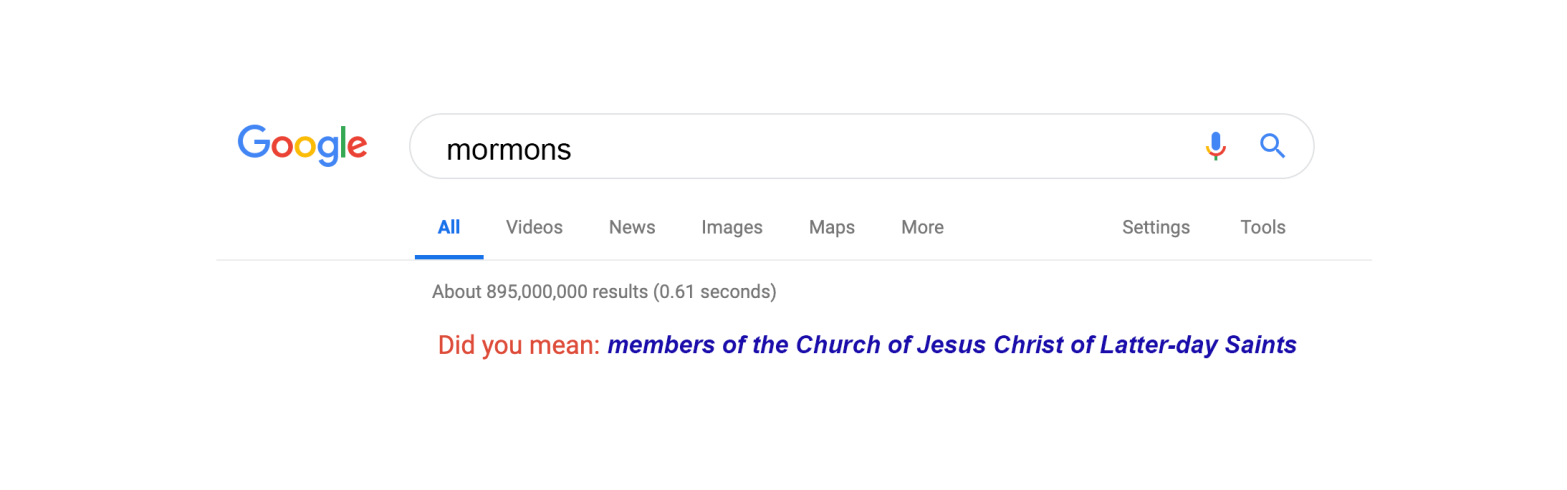
A lot of people know us as Mormons. Many of us even commonly use that name. But if you Google “Mormons,” Google really should respond with saying, Did you mean: members of the Church of Jesus Christ of Latter-day Saints? It’s true! We really do prefer this mouthful.

Some background

If you are not too familiar with our Church, you might be wondering: Where on earth did the name “Mormon” come from? “Mormon” comes from The Book of Mormon (yes, kind of like the musical, but no, totally not like the musical). It is a book of scripture that testifies of Jesus Christ and is used in tandem with the Bible. Here’s a short video released by the Church of Jesus Christ of Latter-day Saints to explain a little more about it:

Unfortunately, in the early days of the Church, members were called Mormons as a slur, especially in cases of persecution and violence against them. It’s since transformed to a casually-accepted nickname used by members, friends, and enemies alike. Others have tried to be a little more accurate by using the name LDS (Latter-day Saints) as another nickname.

We believe that Christ has been running His Church through prophets for 2 centuries, hastily restoring it to its perfect state in preparation for His Second Coming “… in the dispensation of the fulness of times” as prophesied by the Apostle Paul. (Ephesians 1:10)

Flash forward

Russell M. Nelson, president of the Church since January 2018, has already established a reputation for keeping Church members on their toes, as he has announced many “big changes” to Church policy.

In August of 2018, President Nelson announced the following with all the authority of a living prophet of the Lord Jesus Christ:

The Lord has impressed upon my mind the importance of the name He has revealed for His Church, even The Church of Jesus Christ of Latter-day Saints. (D&C 115:4)

The Church promptly began implementing massive changes throughout their departments and resources to reflect this reemphasis, including the change of the Church website, once lds.org, now churchofjesuschrist.org.

A couple months later in a worldwide Church address, President Nelson gave a 15-minute talk reemphasizing this change. He especially requests that Church members use the correct name of the Church in all cases, and to encourage others to do the same. About this declaration he is unapologetic. As a prophet who speaks for Jesus Christ in these days like the prophets of old, he states:

It is the command of the Lord. … It was the Savior Himself who said, “For thus shall my church be called in the last days, even The Church of Jesus Christ of Latter-day Saints.”

[The Savior] is serious. And if we allow nicknames to be used or adopt or even sponsor those nicknames ourselves, He is offended.

What’s in a name or, in this case, a nickname? When it comes to nicknames of the Church, such as the “LDS Church,” the “Mormon Church,” or the “Church of the Latter-day Saints,” the most important thing in those names is the absence of the Savior’s name. To remove the Lord’s name from the Lord’s Church is a major victory for Satan. When we discard the Savior’s name, we are subtly disregarding all that Jesus Christ did for us—even His Atonement.

I would like to testify that this is true. And now, it has been over an entire year since this initial statement from this prophet of God. 

Policy in practice – a culture shift

Honestly, I have always felt uncomfortable using nicknames for the Church and its members, so I am grateful the change has not been too difficult for me. However, it is hard for me to still see newspaper headlines stating “LDS Church Does This” or “Mormon Bishop Does That.” It pains me even more to hear longtime members of the Church of Jesus Christ of Latter-day Saints—and even some I look up to—say, “…so when we as Mormons do… wait, can I still say that? Well, I’m going to anyway…” or just continue on saying “She’s LDS” or “we’re just Mormons” without batting an eye.

Despite this disappointment, I have perceived that we are edging toward a massive cultural shift. The more I and those around me do use the name of the Church correctly, the culture of the Church has already begun to move away from arbitrary, rote traditions toward thoughtful applications of Christ’s teachings and love. 

A few months ago, I was home visiting my parents. Over Sunday dinner, they were urging my 17-year-old brother to ask out a girl in the ward. Flustered and annoyed, he started to respond, “No! I can’t go out with her! You can’t ask people out in your ward when you’re M—a member of the Church of Jesus Christ of Latter-day Saints!” 

We all started to laugh, but then we all paused. As we considered his statement, a critical conversation ensued. Why in the world would being a member of the Church of Jesus Christ of Latter-day Saints mean you can’t ask someone out in your congregation? Jesus never said anything about that. It’s a little ridiculous. 

There are other aspects of the culture of members of the Church (often dubbed “Mormon Culture” or even “Utah Mormon Culture”) that have nothing to do with following Christ and perhaps even distract or contradict this mission.

A cartoon from 2011, poking fun at “Mormon Standard Time” (Credit: The Mormon Cartoonist)

For example, I’ve heard many members use something coined “Mormon Standard Time” as a joking excuse for being late to events or even to church. But think about it: Why would being a member of Jesus Christ’s restored Church mean you can arrive late to your obligations? If anything, wouldn’t that mean you should be generally reliable and honest rather than tardy and fickle?

What we’re promised

On the other hand, I would like to challenge you, members and friends of the Church, to imagine a world where everybody refers to us and everything about us as part of the Church of Jesus Christ of Latter-day Saints rather than by any nickname.

Indeed, President Nelson reveals these exciting promises:

My dear brothers and sisters, I promise you that if we will do our best to restore the correct name of the Lord’s Church, He whose Church this is will pour down His power and blessings upon the heads of the Latter-day Saints, the likes of which we have never seen. We will have the knowledge and power of God to help us take the blessings of the restored gospel of Jesus Christ to every nation, kindred, tongue, and people and to prepare the world for the Second Coming of the Lord.

President Nelson, October 2018

I believe Christ’s work through His Church will be unhindered and unleashed to work on people and the world in a way it has never been permitted to in the history of the world. Imagine the restored power of Jesus Christ in all its glory shared with light and authority. I believe the future of Christianity is very bright. 

My favorite “policy change”

This correction is perhaps my favorite of recent changes to Church policy. No, it wasn’t 2-hour church! And of course, the introductions to ministering and the family-centered, church-supported curriculum, Come, Follow Me, are very dear to me.

However, I feel that shifting the Church’s focus toward Christ in something as simple as a name prepares the way for effective, Christ-inspired incorporation of all recent changes as well as those to come. For example, by putting Christ at the center of our conversation, communication, and even identities as members of His Church, we receive added power to invite Him into our congregations and homes as we incorporate policies like ministering and Come, Follow Me.

In so many ways, we are like the New Testament Jews learning to retire the Law of Moses and adopt the Higher Law taught by Jesus. I believe President Nelson was inspired by the Lord to help us live at a higher standard to prepare for Christ’s not far distant return to His Earth.

I encourage you, whoever you are, to please try to take the prophet’s counsel to heart. Please don’t call us Mormons, and please do remember that we are trying to follow Jesus in everything—an effort that is not meant to be convenient. No matter who you are, I know the Lord will bless you for following this commandment. 

What do you think?

How have you and your family incorporated this reemphasis of the correct name of the Church? Do you agree that it will chase away aspects of “Mormon Culture?” Why or why not? Which aspects would you like to see dispelled? Share your thoughts in the comments.

Making General Conference “Not Only Memorable… [but] Unforgettable” – 15 Ways to Prepare for General Conference

Members of the Church of Jesus Christ of Latter-day Saints around the world have just heard again from modern-day Moseses: a living prophet, 12 apostles, and other leaders called by God. For 2 days, they taught us many truths with clarity, provided guidance regarding how to better run Christ’s Church as He would, and left us with exciting promises for the upcoming months.

If you missed any part of this 10-hour event, or to review the messages given, you can visit churchofjesuschrist.org to watch, listen to, or read the addresses.

In the wake of this dense outpouring of God’s word, I have heard most about the closing remarks from our prophet, President Russell M. Nelson, at the end of the conference. He declares the following:

In the springtime of the year 2020, it will be exactly 200 years since Joseph Smith experienced the theophany that we know as the First Vision. God the Father and His Beloved Son, Jesus Christ, appeared to Joseph, a 14-year-old youth. That event marked the onset of the Restoration of the gospel of Jesus Christ in its fulness, precisely as foretold in the Holy Bible.

Thus, the year 2020 will be designated as a bicentennial year. General conference next April will be different from any previous conference. In the next six months, I hope that every member and every family will prepare for a unique conference that will commemorate the very foundations of the restored gospel.

President Russell M. Nelson, October 2019 General Conference

I’ve heard a lot of people talking about how excited they are for next general conference. I like that this enthusiasm regarding general conference is a growing trend as of recent years. President Nelson’s season finale certainly left us eager for more!

However, many seem to be left asking, what should I do to prepare? I have spent the last week asking myself the same question. I know I am very excited and grateful to be a part of this upcoming conference, but what should I do about it? The prophet has promised that if we do our part to prepare, the next general conference will “not only be memorable; it will be unforgettable.”

That’s why I have spent the week accumulating just a few answers to get both of us started!

Disclaimer: President Nelson has specifically asked that we practice the process of personal revelation to choose our own answers and make our own plan to prepare for this special general conference. This list is only provided as a springboard and supplement in your own process. You may choose to incorporate one, a few, many, or none of the following suggestions.

Let’s jump in to 15 ways to prepare for the much-anticipated 2020 bicentennial general conference!

15 Ways to Prepare for General Conference

#1 – Study the First Vision

Reading Joseph Smith’s record of the First Vision as recorded in the Pearl of Great Price is the first method President Nelson suggested as a way to prepare. (See the Pearl of Great Price.)

You may choose to go beyond just reading this record in your effort to learning more about the First Vision. A great place to start may be the Gospel Topics Essay: First Vision Accounts. You may also study and compare each of the 4 firsthand accounts, which are explained and linked in that essay. You might even choose to memorize a section of any of the accounts that speak to you especially.

#2 – Read Saints

Saints: The Standard of Truth, the first volume of the Saints series, released in 2018, details the beginnings of the Restoration of the Gospel and Church of Jesus Christ. You may decide that reading or rereading it may help you understand the heritage of the Church and see the blessing that it is in these latter days.

You may read or listen to the book for free on the Gospel Library app or on the Church website. You may also purchase a physical copy online or at a Church Distribution Center.

#3 – Read the Doctrine and Covenants cover to cover

Members of the Church don’t commonly read this book cover to cover, but the Doctrine and Covenants is the source of many restored truths given to us by a gracious God. As it directly states, the Doctrine and Covenants “[contains] revelations given to Joseph Smith, the Prophet, with some additions by his successors in the presidency of the Church.”

If you have not read, have not read recently, or just feel you could better understand Doctrine and Covenants, this might be a great way for you to prepare for the next general conference.

#4 – Read the Book of Mormon cover to cover

Many members of the Church have grown to love the Book of Mormon. We have been urged by many recent prophets to study it every day.

Many members have purchased (or asked the missionaries for) a copy of the Book of Mormon and read it all the way through with a specific question or topic in mind. Many women answered President Nelson’s call last year to read the Book of Mormon and mark every reference to the Savior. Many who have done this have experienced a change in their lives and an increased sense of peace. They found answers to their questions and strengthened their understanding of and relationship with Jesus Christ.

On the other hand, some members have not yet read it, have not yet read it all the way through, or simply have not yet felt the “mighty change of heart” (Mosiah 5:2) so many claim to feel. Others may think they once felt it but no longer do, at least not as strongly.

Consider setting a goal to read the Book of Mormon all the way through between now and next general conference. You may choose to obtain a new, paperback copy in which you may mark scriptures and take notes as they regard a particular topic of your choice (i.e., the Restoration, blessings the Book of Mormon, Jesus Christ, His Church, etc.).

#5 – Create a piece of art

Some people feel moved to express their feelings through the arts. For example, I like to write what I think into long posts. (Sorry not sorry!) You might feel inspired to create something as well. It may be in the form of a musical composition, a poem or essay, a 3-dimensional art project, or sketch or painting. This may help you focus your studies on a particular aspect of the Restoration and strengthen your testimony of it as you share it.

#6 – Ask the missionaries for help

The first lesson missionaries teach (as recommended in Preach My Gospel) is the Message of the Restoration of the Gospel of Jesus Christ. You may invite the missionaries to your home for a family activity or family home evening. Ask them to teach you the lesson of the Restoration and bear testimony of it in your home.

Ponder if there is someone in your life whom you could invite to attend the lesson. Ask God for strength and guidance as you invite them with love.

#7 – Watch the Book of Mormon Videos

President Nelson also recommended incorporating the new Book of Mormon Videos into your family and individual studies. This may be a great way to inspire conversations with and teach your children. It also might be a good way to replace other media time in your home with uplifting messages of Christ.

New videos are released on YouTube; episodes of the first season are posted on Fridays through the end of 2019.

#8 – Study the doctrine of the priesthood

In the women’s session of this past general conference, President Nelson gave women a charge:

I entreat you to study prayerfully all the truths you can find about priesthood power. You might begin with Doctrine and Covenants sections 84 and 107. Those sections will lead you to other passages. The scriptures and teachings by modern prophets, seers, and revelators are filled with these truths. As your understanding increases and as you exercise faith in the Lord and His priesthood power, your ability to draw upon this spiritual treasure that the Lord has made available will increase. As you do so, you will find yourselves better able to help create eternal families that are united, sealed in the temple of the Lord, and full of love for our Heavenly Father and for Jesus Christ.

President Nelson, October 2019 General Conference, Women’s Session

Women, this certainly should be part of your plan to prepare for the next general conference. Men, you may also decide that following this counsel will benefit you and your family.

#9 – Study older general conference addresses by topic

All general conference addresses are evidence and a part of the ongoing process of the Restoration of Christ’s Church. Studying from many of them could be important in strengthening your testimony. If you decide to do so, choose a topic related to the Restoration you would like to study. Use your Gospel Library app or the Church website to search for and study all (or many of) the conference talks about that topic.

#10 – Find a personal place to write impressions, thoughts, questions, and take-aways

There is a good chance that you will choose to include this as part of your plan in tandem with one or many other methods of preparation.

There are also many ways to do this!: You could write in a notebook something that stands out to you every time you study, or you could even purchase a separate journal to fill with insights from your studies. You might prefer to make a list on your phone of all the blessings you can identify that come thanks to the Book of Mormon. Perhaps you will choose to make extensive notes and highlights in your Gospel Library app as you study.

I would highly recommend at least writing down the goals you have chosen for your plan to prepare for general conference.

Choose a system that works for you. If you try it and it isn’t working, just try something else.

#11 – Share your insights on social media

You might find that putting your social media time to good use can help you think more deeply about the things you study. You might set a goal to share one message a week on your Instagram story about something you read in your studies of the Restoration, or perhaps you will choose to share messages from the Book of Mormon Videos or other Church publications on Facebook.

Find Spack Chats on Facebook and Instagram for more sharable insights and gospel conversations to get involved in.

#12 – Get an accountability partner or group

After you set your specific study goals, it may help you stay committed to get together with at least one person you are close to (a spouse, roommate, parent, good friend, etc.) and share your plan with them. It may be helpful to ask them to follow up with you occasionally to see how you are doing and what you are learning. You might ask them to do some of your plan with you for added support.

You could even get together with your family or a group of people who know each other’s goals and ask questions about what everyone is learning. You could even do this by hosting a group chat with friends, family, or ward members.

#13 – Share your testimony in sacrament meeting

If you are like me, you do not like sharing your testimony in sacrament meeting on fast Sunday.

I was once, however, inspired by a couple who made a New Year’s Resolution to share their testimony every month in fast and testimony meetings. They taught me what it means to share a powerful testimony. Their testimonies were often brief and rarely varied much in content or structure. They were mostly simple declarations of belief: “I believe in… I have faith that… I know…”

Our own faith and testimony will grow if we share simple, powerful testimony of the Savior, His Gospel, His Restored Church, and the consequent blessings thereof. As Apostle of the Lord Boyd K. Packer states, “A testimony is found in the bearing of it!

Therefore, in your pursuit to learn more about Christ and His Restored Church, you could choose to set a goal for yourself to bear testimony in church.

#14 – Choose your own questions to study

As President Nelson concluded: “Select your own questions. Design your own plan.”

You might already have questions, concerns, uncertainties, or even doubts about aspects of the Church. There might just be one thing in Church history (or recent news!) that you don’t understand; you might wonder if Jesus Christ is real or really cares for you. Whether great or small, prayerfully decide which questions should be your guide as you plan to prepare for the next general conference.

If you don’t even know what you don’t know, ask God. He will guide you to what He wishes to teach you.

#15 – Appreciate what God has already taught you – study this past general conference

Take heed what ye hear: with what measure ye mete, it shall be measured to you: and unto you that hear shall more be given.

MARK 4:24

Show the Lord that you are grateful for this past conference. The Lord will give us what we prove we are ready to receive. If we ignore or forget about existing recent counsel, the Lord will hesitate to open to us new revelation.

Study each conference talk again. Look for what God is asking you to do. Write down specific goals and begin making changes to do these things in your life. Start now. Don’t be discouraged if (when) you are not perfectly achieving these goals; just don’t give up! If you consistently try to improve between now and next conference, you will show to the Lord that you are eager to hear His word and willing to work to apply it.

I believe that, if we make a habit of treasuring the word of God every time it is granted to us, every general conference will become unforgettable.

Share your insights with Spack Chats

So this is sort of a bonus tip. You’re welcome 😉

Of course, get the conversation going below. Also, check out the Spack Chats Instagram and Facebook pages, where you can share additional insights with extra conversation prompts. With your permission, I may even highlight your ideas and experiences.

I think that, if we help each other along, we can each experience a deeper conversion as we prepare for the upcoming general conference and everything else the Lord has in store for us.

What are you going to do to prepare for the bicentennial general conference? Do you have any other ideas to share? Is there something you have already learned since beginning to prepare?

The Truth About Pregnancy

A guide for people who are pregnant, may ever be pregnant, have or may ever have a pregnant partner, have a family at all, belong to a church congregation, belong to any social group, or are people.

“For a small moment have I forsaken thee; but with great mercies will I gather thee.”

Isaiah 58:7

Well, let me clarify that this is a truth about pregnancy. Pregnancy is wildly different for every woman. 

When my husband and I found out I was pregnant, we were so happy. We were incredibly grateful for this miracle and very excited to meet our little one.

It seemed that no sooner had I found out I was pregnant that I found out what that meant for my body. I was instantly out of commission. My summer full of big plans and aspirations was depleted to a miserable many months of barf bags and bed. There were days at a time when I couldn’t leave my sweltering, non-air-conditioned apartment. (The delayed launch of this blog is just one case of things not going according to plan.)

Pregnancy became hell.

I suddenly felt abandoned by God and weak in all areas of my life:

Physically, I felt like I was about to shrivel up; in addition to vomiting every day, I couldn’t exercise at all, sleep well, or eat or drink regularly. I was sweaty all day long, and on the days I felt well enough to shower, I usually only did so when my husband was available to help me when I thought I would pass out.

Mentally, I could barely think straight. It was so difficult to focus on anything except the nausea and the pain.

Socially, I felt utterly alone until Matt got home from work. Almost any other interaction I received was usually at best, shallow, and at worst, a slap in the face. Most people I interacted with told me to “let them know if I needed anything” or gave me “helpful” advice about the simple steps I needed to take to stop feeling sick. Or worse: they just told me to “enjoy being pregnant.”

Spiritually, I was sick and fragile; reading the scriptures was strenuous and difficult, I barely ever made it to church, temple attendance became impossible, and I felt forgotten by my ward and by God.

Worst of all, I didn’t feel like I was having a baby;
I felt like I was having an illness.

Finally, about halfway through pregnancy, it seems that the “first trimester” is mostly behind me. I know I’m still one of the blessed ones who doesn’t suffer from this kind of morning sickness (or worse) every single day during the entirety of pregnancy, and I’m grateful for that. I’m still nauseous in the morning and some days I do throw up, but most days, I can get on with my life. I finally feel like a person again, and my energy has in large part returned. 

So why would I even share all this?

To explain to you 3 things I’ve learned and how I came to understand them. These are things I wish I had known years ago and hope for the sake of society that everyone else knew, too.

1) God will not leave you alone, at least not truly, and not for long. Reach out to Him and He will run to you.

My gratitude to the Lord has increased so much in the last few weeks. Even though it was hard for me to see it then, in retrospect, I can see that He was with me. And I can see increasing evidence that He is still taking care of me. He is slowly granting me more understanding of His plan for me and what He has been doing to bring it about. I have faith that I will come to understand this better in the months and even years to come.

I felt entirely alone, but heavenly glimmers of comfort have come to restore my hope that the Lord will allow me to feel His presence more and more fully in the hours, days, months, and years to come.

I would advise everyone to write down the moments or periods when they do feel blessed. You will need to remember those times when the trials come (or get worse). 

I echo the words of Isaiah, when he declared that the Lord might leave us feeling alone for a moment, but that He has always been present and will soon allow us to feel His peace in full:

“For a small moment have I forsaken thee; but with great mercies will I gather thee.

“In a little wrath I hid my face from thee for a moment; but with everlasting kindness will I have mercy on thee, saith the Lord thy Redeemer.

“For the mountains shall depart, and the hills be removed; but my kindness shall not depart from thee, neither shall the covenant of my peace be removed, saith the Lord that hath mercy on thee.”

Isaiah 58:7-8, 10

Finally, the Lord has granted me eyes to see that my little one is real, precious, and valuable. I saw that my prayers were being answered when I saw my baby wriggle curiously during my last ultrasound.

2) Women should share when they get pregnant.

Women are often hesitant to share when they are pregnant. I was. Much of this is caused by anxiety regarding higher miscarriage rates in the first trimester. 

But here is what I have decided: While you are certainly entitled to announce a pregnancy on your own terms, it is okay for people to know if you are pregnant and if you lose a child to miscarriage. In fact, for some people, it might even really help. 

In the last year or so, I have spoken with several women who have confided in me about their own recent miscarriages, sometimes in the midst of their heartbreak and recovery. What is perhaps most heartbreaking is that nobody knows of their pain. Nobody knows they need help.

Women don’t need to inform Instagram the moment they get a positive at-home pregnancy test, and some women really might need some time before they are ready to let anyone else know. However, I think fear of miscarriage should not inherently be a universal reason for all women to wait until 12 weeks to announce their pregnancy. 

If a woman does miscarry, it may truly be helpful for their ward, friends, family, and workplace to know and be ready to support them in any way they can. When anyone experiences the death of a loved one, it usually merits some loving response from all of these parties. All the more reason should the people in a woman’s life intervene to bless and assist her when she loses her child at her own personal physical trauma.

Cases of miscarriage aside, women should not suffer in silence in their moments of need. I know not all women are as affected by pregnancy as I have been, but I know I am not the only one.

3) People need to reach out to women during early pregnancy, not just late pregnancy and after baby comes.

I grew up understanding that pregnancy and childbirth was hard, but not really a thing that has to affect your life too much.

My whole life, I had heard and believed that any woman can be as professionally successful as men and achieve all of their dreams of motherhood and more at the same time. I thought pregnancy was hard, but because women were tough, it wasn’t really something that could get in the way of any of their goals. While I believe these claims are are rooted in encouraging intentions (and some successful case studies), these lofty expectations set me up for internal dissonance and severe disappointment.

My own mom had 5 kids with no complications. She has worked part-time as long as I can remember, including during pregnancy. She maintained her very active lifestyle with seemingly few abnormalities during pregnancy; she even went running the morning she went into labor with my youngest brother.

The ward I grew up in was very loving and supportive, but from them, I learned to perpetuate my misconceptions. To me, it seemed that the women there had similarly straightforward pregnancies. Pregnant women attended church and went about their lives. When they had their babies, the sisters promptly ensured that those families received dinners every night for at least a week, then everyone moved on. That was just how it was.

I’ve since learned that that wasn’t how it was for everyone there; at least one woman in my home ward spent her last pregnancy entirely crippled; she was so sick, she had to be treated in the hospital with an IV.

I don’t know how many women have masked and downplayed their pain and misery during pregnancy, or who have been simply ignored until cute little baby makes an appearance. I know that for myself, I walked through hell almost totally alone, and there must be women that feel the same way.

But I ask forgiveness from God and from society for my naivety and for turning a blind eye to those I could or should have reached out to. And I thank those blessed few who did come visit me when I was in such misery.

If there is a pregnant woman in your life, ward, family, whatever, reach out to her. God placed her in your life, and there is a good chance she needs something from you. Be willing to find out from her and from God what you can do.

Finally standing—and smiling!—at 22 weeks

Let’s zoom out for a second

As I “zoom out” to what I hope is a more Godlike perspective, the way I see it, how we treat a pregnant woman should not be all that different than how we treat anyone else.

I believe most people are suffering more than they admit. Each of us should take more personal responsibility to care for those around us. Those who have promised to serve Christ have a special call to bear others’ burdens.

God should not need to do more than place someone in the path of a Christian to say to them: “I have placed this precious soul in your stewardship. Take care of them.”

I pray that you and I can both step up to this stewardship a little better with every day.

“As we have therefore opportunity, let us do good unto all men, especially unto them who are of the household of faith.”

Galatians 6:10

What do you think?

I would love to hear what you think. Do you agree? Is there a scripture or doctrine that would inform us better? What is your experience with pregnancy and/or helping others? Do you feel inspired to do something? Get chatting in the comments below.